
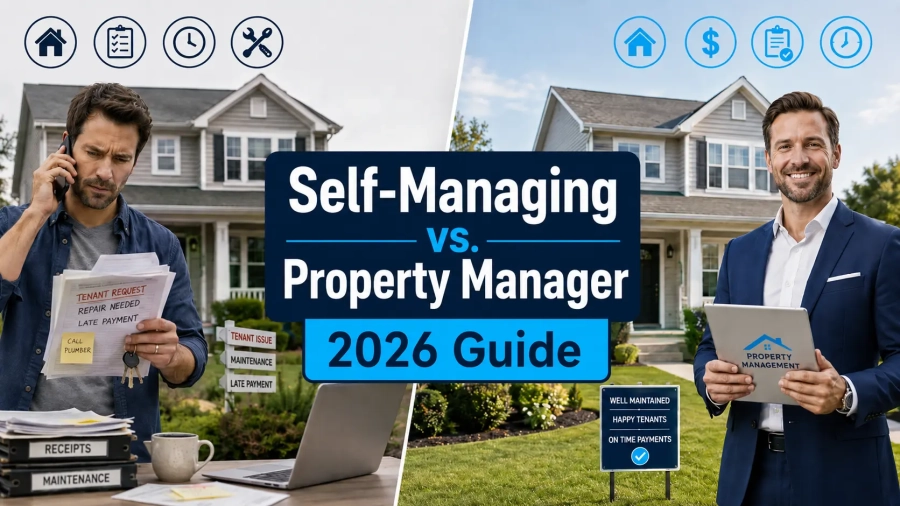
Self-Managing vs. Hiring a Property Manager in Orange County: Is It Worth It in 2026?
Table of Contents
Quick Answer: Is Hiring a Property Manager Worth It?
For many Orange County rental property owners, hiring a property manager can be worth it when the owner lacks time, lives far from the property, struggles with tenant issues, is unsure about California rental laws, or wants a more professional system for leasing, rent collection, maintenance, inspections, and documentation.
Self-management can work. Some landlords are organized, local, legally informed, responsive, and comfortable dealing with tenants. But the real question is not simply, “Can I save the management fee?” The better question is:
Is self-management saving you money, or quietly costing you time, rent, peace of mind, and legal exposure?
In a high-value rental market like Orange County, one bad tenant, one prolonged vacancy, one mishandled security deposit, or one poorly documented dispute can cost far more than a monthly management fee.
This article breaks down both options clearly so you can decide what makes sense for your rental property in 2026.
What Self-Managing an Orange County Rental Really Involves
Self-managing a rental is not just collecting rent once a month. A rental owner who self-manages is responsible for almost every operational, financial, and tenant-facing part of the property.
That usually includes:
- Advertising the rental
- Pricing the property correctly
- Responding to inquiries
- Showing the property
- Screening applicants
- Preparing and signing lease documents
- Collecting rent
- Handling late payments
- Serving proper notices when needed
- Coordinating repairs
- Responding to emergencies
- Conducting move-in and move-out inspections
- Managing security deposits
- Keeping records
- Handling tenant communication
- Staying updated on California landlord-tenant rules
For owners in Irvine, Anaheim, Newport Beach, Santa Ana, and other parts of Orange County, self-management also means understanding city-by-city differences, HOA expectations, market pricing, tenant expectations, and vendor availability.
A property manager does not remove every owner’s responsibility, but a good manager creates systems so the owner is not personally handling every call, repair, deadline, and tenant issue.
Self-Managing vs. Hiring a Property Manager: Side-by-Side Comparison
| Category | Self-Managing | Hiring a Property Manager |
|---|---|---|
| Time required | High | Lower for the owner |
| Upfront cost | Lower | Management fee applies |
| Tenant screening | Owner handles process | Professional screening system |
| Rent collection | Owner follows up | Manager enforces payment process |
| Maintenance | Owner finds and coordinates vendors | Manager coordinates vendors |
| Legal compliance | Owner must track rules | Manager uses established procedures |
| Vacancy management | Owner markets and shows property | Manager handles leasing process |
| Documentation | Owner must maintain records | Manager usually documents communication, inspections, notices, and expenses |
| Stress level | Can be high | Usually lower |
| Best fit | Local, experienced, hands-on owner | Busy owner, out-of-area owner, investor, or owner wanting less risk |
The better option depends on your property, experience, schedule, risk tolerance, and long-term investment goals.
The Real Cost of Self-Managing a Rental Property
Many landlords choose self-management because they want to avoid paying property management fees. That is understandable. But the visible cost is only one part of the equation.
The hidden costs of self-management may include:
- Lost rent from longer vacancy
- Underpricing the rental
- Accepting a weak tenant due to rushed screening
- Slow response to maintenance issues
- Paying too much for vendors
- Poor documentation during disputes
- Missed legal deadlines
- Stress from late-night or workday tenant calls
- Time spent coordinating repairs, inspections, and renewals
In Orange County, where rents are relatively high, even a short vacancy can be expensive. RentCafe reports the average apartment rent in Orange County at about $2,865, while USA TODAY’s apartment rental data reported overall rent around $2,567 for Orange County in April 2026; exact rent varies by unit type, city, neighborhood, and data source.
This is why the self-management decision should not be based only on the monthly management fee. It should be based on net performance, risk control, and owner time.
Many owners also compare professional management only by asking, “How much does it cost?” That is a fair question, but the better comparison is management cost versus lost time, vacancy exposure, legal risk, tenant turnover, and maintenance coordination. Before making a decision, landlords should understand how much property management costs in Orange County and what is typically included in those fees.
Tenant Screening: Where Many DIY Landlords Take on Risk
Tenant screening is one of the most important parts of rental management. A strong tenant can make ownership feel simple. A poorly screened tenant can create months of stress, late rent, property damage, legal notices, and turnover costs.
A professional screening process usually looks at:
- Credit history
- Income verification
- Rental history
- Employment or income stability
- Prior landlord references
- Eviction history, where lawfully considered
- Consistent written criteria
- Fair housing compliance
California landlords must also be careful with fair housing rules. The California Civil Rights Department (CRD) enforces state fair housing laws that prohibit discrimination based on protected characteristics, and California also protects source of income, including housing subsidies such as Housing Choice Vouchers.
For DIY landlords, the risk is not always intentional discrimination. Sometimes the problem is inconsistent screening, such as asking one applicant for extra documents but not another, or applying different income standards from one applicant to the next. Clear written criteria, careful documentation, and a fair, repeatable process can help reduce that risk. For landlords who want to avoid problems before approving a tenant, learning how to screen tenants legally in California is a natural next step to understand..
A property manager can help by using consistent written screening standards, documenting decisions, and keeping the process more objective.
Rent Collection, Late Payments, and Lease Enforcement
Rent collection sounds simple until rent is late.
A self-managing landlord has to decide:
- When to follow up
- What to say
- Whether to charge late fees
- Whether the lease allows the fee
- What notice may be required
- How to document communication
- When to escalate
- When to contact legal counsel
This can become uncomfortable, especially when the tenant has a sympathetic story or the owner wants to avoid conflict. But inconsistent enforcement can weaken your position and make future problems harder to manage.
A property manager typically uses a defined rent collection process: due dates, grace periods if applicable, written reminders, late notices, documentation, and escalation steps. The goal is not to be harsh. The goal is to be consistent, professional, and legally careful.
For Orange County owners who are busy, traveling, working full-time, or managing multiple properties, consistent rent collection is one of the strongest reasons to consider professional management.
Late rent is one of the most stressful situations for self-managing landlords because it involves money, timing, documentation, and sometimes legal notices. If a tenant falls behind, owners should avoid emotional or inconsistent responses and understand what landlords should do when a tenant is not paying rent before the issue becomes harder to manage.
Maintenance, Repairs, and Vendor Coordination
Maintenance is one of the biggest differences between self-management and professional property management.
When you self-manage, tenants call you. That may mean a leaking sink during your workday, an appliance issue during dinner, or an urgent repair while you are out of town.
You are responsible for:
- Diagnosing the issue
- Finding a vendor
- Confirming availability
- Coordinating tenant access
- Reviewing estimates
- Approving repairs
- Paying invoices
- Following up with the tenant
- Documenting the work
California landlords are responsible for maintaining habitable rental housing. The California Department of Justice explains that landlords must keep rental homes safe and fit to live in, including basics such as plumbing, electrical systems, heating, and other habitability-related items.
In Orange County, vendor access and pricing can vary depending on the city, property type, HOA rules, urgency, and trade. A coastal condo in Newport Beach may have different access requirements than a single-family rental in Anaheim or a townhome in Irvine.
A good property manager usually has vendor relationships, repair workflows, tenant access procedures, and documentation systems. That does not mean every repair is cheap. It means the owner is not personally coordinating every moving part.
Legal Compliance: Why California Landlords Need Strong Systems
This is where the decision becomes serious.
California is a compliance-heavy rental market, and Orange County landlords need to pay attention to state law, local rules, lease language, notice requirements, documentation, tenant screening, fair housing, rent increases, security deposits, entry rules, habitability duties, and just-cause eviction requirements.
This section is for general educational purposes only and is not legal advice. Owners should consult qualified legal counsel for specific legal questions.
A self-managing owner can absolutely manage a rental legally, but the owner must be willing to stay current. California rental rules can change, and some requirements may vary depending on the property type, city, tenancy length, ownership structure, HOA rules, or whether the property is exempt from certain statewide laws.
For owners who want to reduce compliance risk, understanding how property managers help Orange County landlords avoid legal trouble can be a helpful next step before deciding whether to continue self-managing.
AB 1482 and statewide rent increase rules
California’s Tenant Protection Act, commonly known as AB 1482, limits annual rent increases for many residential rental properties and restricts the reasons a landlord may use to terminate certain tenancies. The California Attorney General explains that most residential landlords and property managers must comply unless an exemption applies, and the law includes both rent-cap and just-cause eviction provisions. (Source)
For covered units, the statewide rent cap generally limits annual rent increases to 5% plus the applicable change in cost of living, or 10%, whichever is lower. The California Attorney General also notes that local rent laws may impose lower limits in some areas, so owners should verify whether state law, local law, or both apply before increasing rent.
For the Los Angeles, Long Beach, Anaheim CPI region, which includes Orange County, AAOC reported an 8.0% maximum rent increase for covered AB 1482 units for increases effective August 1, 2025 through July 31, 2026. Owners should note that the April 2026 CPI has now been released; based on the AB 1482 formula, increases effective August 1, 2026 through July 31, 2027 are expected to be capped at 8.7% for this region, unless a stricter local rule applies.
Not every rental property is covered in the same way. Some exemptions may depend on property type, when the property was built, ownership structure, and whether the required exemption notice has been properly provided. Owners who are unsure whether the law applies should review AB 1482 exemptions for Orange County rental properties before issuing rent increases or ending a tenancy.
Just-cause eviction requirements
AB 1482 also affects how many California landlords may end a tenancy. California Courts explain that when the Tenant Protection Act applies, many landlords must have a legally recognized just cause to end a rental agreement, and certain notices must state the just cause. Some no-fault reasons may also require relocation assistance or a rent waiver.
This matters because a self-managing landlord cannot simply rely on informal communication, text messages, or vague lease enforcement language when trying to end a tenancy. The required notice, timing, reason, and documentation can all matter. If a tenant issue becomes serious, landlords should seek legal guidance rather than guessing.
Security deposit limits and return rules
California security deposit rules changed in recent years. California Courts state that a security deposit is money held by the landlord in case the tenant damages the rental unit, breaks the lease, or does not pay rent. The California Attorney General’s security deposit guidance explains that, for many residential rentals, deposits collected after July 1, 2024 are generally limited to one month’s rent, with a limited small-landlord exception that may allow up to two months’ rent when specific requirements are met.
After a tenant moves out, California Courts explain that the landlord generally has 21 days to return the full security deposit or provide an itemized statement showing lawful deductions and any remaining refund. California Courts also identify common lawful deductions, such as unpaid rent, repairing tenant-caused damage beyond normal wear and tear, and cleaning the unit to the level of cleanliness it had at move-in.
Security deposit mistakes can create disputes even when the owner believes the deduction is reasonable. To reduce risk, landlords should use move-in photos, move-out photos, itemized records, receipts, and clear communication. A dedicated guide on California security deposit laws for Orange County landlords would support owners who want to handle deposits more carefully.
Fair housing and tenant screening
Tenant screening must be consistent, documented, and fair. The California Civil Rights Department (CRD) states that California’s Fair Employment and Housing Act applies to most housing providers, including landlords, tenant screening companies, real estate agents, home sellers, builders, mortgage lenders, and housing authorities. The law prohibits discrimination and harassment in housing based on protected characteristics.
California also protects sources of income. The Civil Rights Department explains that housing providers, including private landlords, property management companies, homeowners associations, corporations, and others who rent residential property in California, must comply with source-of-income protections. This includes protections involving housing subsidies such as Section 8/Housing Choice Vouchers.
For DIY landlords, the risk is often not intentional discrimination. The risk is inconsistency. If one applicant is treated differently from another, if screening criteria are unclear, or if the landlord rejects an applicant for a reason that conflicts with fair housing rules, the owner may create avoidable exposure. Owners should use written screening standards and review how to screen tenants legally in California before advertising the rental or accepting applications.
Landlord entry rules
California landlords also need to follow rules before entering a tenant-occupied rental unit. California Civil Code Section 1954 identifies when a landlord may enter a dwelling unit, such as in emergencies, to make necessary or agreed repairs, to show the unit under certain circumstances, or when the tenant has abandoned or surrendered the premises. The statute also provides that 24 hours is generally presumed reasonable notice in the absence of evidence to the contrary. (Source)
This is important for self-managing owners because maintenance coordination, inspections, showings, and vendor access must be handled professionally. Even when the owner has a legitimate reason to enter, improper notice or poor communication can damage the landlord-tenant relationship and create unnecessary conflict.
Habitability and maintenance responsibilities
California landlords are responsible for maintaining rental housing in a habitable condition. The California Attorney General explains that tenants have a right to safe and healthy housing, and landlords must address conditions that affect habitability. This can involve plumbing, heating, electrical systems, pests, mold-related issues, water intrusion, or other conditions depending on the facts. (California DOJ)
For Orange County rental owners, this makes maintenance response time more than a customer-service issue. It is also a risk-management issue. If repairs are delayed, poorly documented, or handled by unreliable vendors, the owner may face tenant dissatisfaction, property damage, or legal exposure.
Property management licensing in California
Owners can usually manage their own rental property without a real estate license. But if an owner hires someone else to handle leasing, tenant placement, lease negotiations, or rent collection for pay, California real estate licensing rules may apply. Under the California Department of Real Estate’s 2026 Real Estate Law, Business and Professions Code Section 10131 treats those activities as real estate broker activities when performed for another person for compensation or expected compensation.
Because of this, owners should be careful about hiring unlicensed people to help with leasing, rent collection, or finding tenants. A property management company or person doing this work generally should be properly licensed or working under a licensed broker, unless a specific legal exception applies. Owners can check a license through the California Department of Real Estate’s public license lookup tool.
Local and property-specific rules
Even when statewide California law applies, Orange County owners should still consider local and property-specific requirements. A rental in Irvine, Huntington Beach, Costa Mesa, or Santa Ana may involve different HOA rules, city registration requirements, short-term rental restrictions, parking rules, inspection expectations, or community standards.
This is especially important for condos, townhomes, coastal properties, HOA-governed homes, multifamily properties, and short-term or mid-term rental strategies. Owners should confirm city-specific and HOA-specific requirements before advertising, leasing, increasing rent, terminating tenancy, or changing rental use.
Because California rental rules involve rent caps, just-cause requirements, security deposits, entry notices, fair housing, maintenance duties, licensing issues, and documentation, owners should not treat compliance as a side task. If you are not confident managing these details, professional property management may help reduce operational risk and create a more consistent process.
Stress, Time, and Risk: The Hidden Decision Factors
The biggest cost of self-management is often not money. It is a mental load.
Ask yourself:
- Do tenant calls interrupt your workday?
- Do you delay repairs because you are too busy?
- Do you feel anxious when rent is late?
- Do you know which notice to serve and when?
- Do you have reliable vendors available quickly?
- Do you document every important interaction?
- Do you know when a tenant issue has become a legal issue?
- Do you enjoy managing the property, or do you resent it?
Some owners are good at self-management but still hate it. Others can do it, but it distracts them from higher-value work.
That is where a property manager becomes more than a vendor. The right manager becomes an operating system for your rental investment.
If the rental still performs well but managing it feels increasingly disruptive, that may be a sign that the problem is not the property, it is the management structure. Owners who feel burned out should compare their situation with the signs you have outgrown self-managing your rental property before waiting for a bigger issue to force the decision.
When Self-Management May Still Make Sense
Self-management may still be a reasonable choice if:
- You live near the rental
- You have one low-maintenance property
- You understand California landlord-tenant rules
- You have reliable vendors
- You are comfortable communicating with tenants
- You respond quickly to issues
- You keep excellent records
- You have time for showings, inspections, and repairs
- You are not easily stressed by conflict
- You are willing to keep learning as laws change
For example, an experienced owner in Fullerton with one long-term tenant, strong vendor relationships, and organized records may not need full-service management right away.
The key is honesty. If the property is truly easy and you are managing it well, self-management may be fine. But if the property is draining your time, creating risk, or hurting performance, it may be time to reconsider.
When Hiring a Property Manager Makes More Sense
Hiring a property manager may make more sense if:
- You live outside Orange County
- You own multiple rentals
- You have a high-value rental property
- You are unsure about California rental laws
- You have had tenant issues before
- You are tired of maintenance calls
- You are underpricing the rental
- Your property stays vacant too long
- You do not have reliable vendors
- You are uncomfortable enforcing lease terms
- You want better documentation
- You want to scale your rental portfolio
This is especially true for owners who live out of state or outside Southern California. Managing a rental in Irvine, Anaheim, or Huntington Beach from another city or state can become difficult fast when a tenant needs urgent help or a vendor needs access
Final Verdict: Should You Self-Manage or Hire a Property Manager?
Self-managing a rental property in Orange County can work for the right owner. If you are local, organized, legally informed, responsive, and comfortable handling tenant issues, you may be able to manage your rental successfully.
But if self-management is costing you time, causing stress, increasing vacancy, creating compliance worries, or distracting you from other priorities, hiring a property manager may be a smart business decision.
The best property management is not just about collecting rent. It is about protecting the property, improving consistency, reducing risk, documenting the process, coordinating vendors, supporting tenant retention, and helping the owner make better decisions.
If you are unsure whether self-management still makes sense, start with a simple assessment.
–
Not sure if self-management is still worth it? Request a free rental management assessment. Directpads’ property management team can review your property, rent range, risk points, vacancy concerns, and whether full-service management makes financial sense for your situation.
Frequently Asked Questions
Is hiring a property manager worth it in Orange County?
Hiring a property manager can be worth it if you lack time, live far from the property, struggle with tenant issues, need help with leasing, or want stronger systems for maintenance, compliance, inspections, and documentation. It may not be necessary for every owner, but it is often valuable when self-management creates stress or risk.
Can I manage my own rental property in California?
Yes, many owners manage their own rental properties. However, owners must still follow applicable California landlord-tenant laws, fair housing rules, security deposit rules, rent increase rules, notice requirements, and local or HOA requirements. If you hire someone else to perform certain leasing or rent-collection activities for compensation, California licensing rules may apply.
What does a property manager do for an Orange County rental owner?
A property manager may help with rent pricing, marketing, tenant screening, lease coordination, rent collection, maintenance, inspections, vendor coordination, owner reporting, tenant communication, renewals, and documentation. Services vary by company, so owners should ask what is included.
What are the biggest risks of self-managing a rental?
The biggest risks include weak tenant screening, underpricing rent, delayed maintenance, poor documentation, missed legal requirements, longer vacancy, emotional decision-making, and inconsistent lease enforcement.
How much do property managers charge in Orange County?
Property management fees vary by company, property type, service level, lease-up needs, and portfolio size. Some companies charge a monthly management fee, leasing fee, renewal fee, inspection fee, or other service-based fees. Owners should compare total value, not just the lowest fee.
Are Orange County rentals subject to rent control?
Some Orange County rentals may be subject to California’s statewide Tenant Protection Act, including rent caps and just-cause rules, unless an exemption applies. Whether a property is covered can depend on factors such as property type, age, ownership structure, and required notices. Local rules may also vary, so owners should verify the current requirements before increasing rent or ending a tenancy.
What is the California security deposit limit in 2026?
For many residential rentals, deposits collected after July 1, 2024 are generally limited to one month’s rent, with a limited small-landlord exception that may allow up to two months’ rent if specific requirements are met. Landlords should verify whether the exception applies to their situation.
How fast does a landlord need to return a security deposit in California?
California Courts explain that after the tenant moves out, the landlord has 21 days to either return the full security deposit or return the deposit minus lawful deductions with an itemized statement.
Should out-of-state owners hire a property manager?
Often, yes. Out-of-state owners may struggle with showings, maintenance access, emergencies, inspections, and tenant communication. A local property manager can help protect the property and reduce the burden of managing from a distance.
What is the best first step before hiring a property manager?
Start with a rental management assessment. Review your property’s rent range, vacancy risk, tenant history, maintenance needs, legal concerns, and your personal time availability. Then compare the cost of management against the cost of continuing to self-manage.