What property managers do for Orange County rental property owners

What Do Property Managers Do: Orange County Landlord Guide

What Do Property Managers Do: A Practical Guide for Orange County Rental Owners

Table of Contents

    Property managers handle the daily work of operating a rental property on behalf of the owner. In practical terms, they help price the rental, market the property, screen tenants, coordinate leases, collect rent, handle maintenance, communicate with tenants, document inspections, manage records, coordinate move-outs, and provide owner reporting.

    For Orange County rental owners, a property manager can also help reduce the stress of dealing with tenant issues, repair requests, rent collection, vendor coordination, and California rental compliance. These responsibilities matter because they directly affect the owner’s time, risk, cash flow, property condition, and visibility into how the rental is performing.

    The short version: a property manager is not just a rent collector. A good property manager acts as the operating system for your rental property, helping keep the day-to-day work organized, the tenant experience smoother, and the owner better informed.

    What Is Property Management?

    Property management is the process of operating a rental property so it stays occupied, maintained, compliant, documented, and financially organized.

    For a landlord, this work can include everything from answering tenant calls to reviewing repair invoices. For a property manager, these tasks are handled through systems: leasing workflows, tenant screening standards, rent collection processes, maintenance coordination, inspection documentation, owner reporting, and renewal tracking.

    A property manager’s exact duties depend on the property type, service agreement, pricing model, and state or local rules. A single-family rental in Irvine may need a different level of service than a beach-area condo in Newport Beach, a duplex in Santa Ana, or a small multifamily property in Anaheim.

    That is why owners should not simply ask, “What do property managers do?” The better question is:

    What should a property manager do for my rental property, and what is included in the service?

    Property Manager vs. Landlord: What Is the Difference?

    The landlord is the property owner or the person legally responsible for the rental property. The property manager is the company or professional hired to handle management tasks on the owner’s behalf.

    The owner still makes major decisions. For example, the owner may approve pricing strategy, repairs above a certain threshold, lease terms, and long-term investment decisions. 

    The property manager handles the daily execution: tenant communication, rent collection, maintenance coordination, documentation, reporting, and routine management.

    Here is the cleanest way to think about it:

    Role

    Main Responsibility

    Landlord / Owner

    Owns the asset, makes investment decisions, approves major expenses

    Property Manager

    Operates the rental, handles tenants, coordinates services, reports to owner

    This distinction matters because hiring a property manager does not mean giving up control. It means creating a professional system so you are not personally handling every tenant call, repair request, payment issue, and document.

    Core Property Manager Responsibilities

    Most full-service property managers handle several major areas of rental operations.

    These usually include:

    • Rental pricing and market positioning
    • Marketing vacant properties
    • Tenant screening and applications
    • Lease coordination
    • Rent collection
    • Maintenance requests
    • Vendor communication
    • Property inspections
    • Tenant communication
    • Lease renewals
    • Move-out coordination
    • Security deposit documentation
    • Owner statements and financial reports
    • Legal and compliance process support

    For rental owners, broad promises are not enough. Saying a property manager “handles maintenance” should mean there is a clear process for receiving repair requests, coordinating vendors, reviewing estimates, approving work, tracking invoices, and keeping the owner informed.

    That level of detail is what separates basic management from useful management.

    Rental Pricing and Market Positioning

    One of the first things property managers do is recommend a rental price.

    Pricing matters because both overpricing and underpricing are expensive. If the rent is too high, the property may sit vacant. If the rent is too low, the owner loses income every month.

    A property manager should look at comparable rentals, location, property condition, amenities, seasonality, tenant demand, and current market behavior. In Orange County, pricing can vary significantly between Irvine, Santa Ana, Costa Mesa, Anaheim, and Newport Beach.

    The goal is not always to chase the highest possible rent. The goal is to find the strongest rent the market will support while still attracting qualified tenants quickly.

    This is also where Orange County property management becomes important. Local pricing knowledge helps owners understand whether they are competing with newer apartments, single-family rentals, coastal homes, HOA-governed condos, or small multifamily units.

    Marketing Vacant Rental Properties

    When a property is vacant, the manager’s job is to reduce downtime without rushing into a bad tenant decision.

    Marketing may include listing preparation, rental description writing, photos, online advertising, showing coordination, lead follow-up, and applicant communication. Marketing, showing vacant units, and setting a competitive rent price are some of the most important leasing responsibilities a property manager handles.


    A strong rental listing should do more than say “2 bed, 2 bath available.” It should explain the property’s best features, neighborhood advantages, parking details, pet policy if applicable, appliances, laundry, outdoor space, HOA requirements, and application expectations.

    For owners, the key question is: does the manager have a leasing process, or are they just posting the property and hoping?

    A practical leasing process should answer:

    • Where will the property be listed?
    • How quickly are leads answered?
    • Who handles showings?
    • What screening criteria are used?
    • How often will the owner receive updates?
    • What happens if the property does not lease quickly?

    Vacancy is one of the most expensive problems in rental ownership. A property manager should help reduce that risk with pricing, marketing, follow-up, and screening discipline.

    Tenant Screening and Application Handling

    Tenant screening is one of the most important responsibilities of a property manager.

    A strong screening process may review credit history, income, employment, rental history, prior landlord references, eviction history where lawfully considered, pet information if applicable, and identity verification. The goal is to choose a qualified tenant using consistent written standards.

    This matters because fair housing issues can arise when landlords or managers use inconsistent criteria. California’s Civil Rights Department enforces state fair housing laws that prohibit discrimination based on protected characteristics such as race, national origin, religion, disability, gender, sexual orientation, gender identity, familial status, and other protected categories. 

    California also protects lawful source of income, which can include housing subsidies. Owners and managers need to be careful not to reject applicants simply because of a protected source of income.

    Property managers do not remove every risk, but a disciplined screening process can reduce avoidable mistakes. This is why how to screen tenants legally in California is a useful topic for owners who want to understand what happens behind the scenes before a lease is signed.

    Fast tenant placement is not the same as good tenant placement. A vacant property is costly, but a bad tenant can be worse.

    Lease Preparation and Move-In Coordination

    After an applicant is approved, the property manager helps coordinate the lease and move-in.

    This may include preparing lease documents, collecting required signatures, confirming move-in funds, documenting the security deposit, setting up tenant portal access, delivering keys or access credentials, explaining rent payment procedures, and completing a move-in condition report.

    A clean move-in matters because it creates the baseline for the tenancy. If the property condition is poorly documented at move-in, disputes become harder later. This is especially important for security deposit handling after move-out.

    A good property manager should make sure the lease reflects the rent amount, deposit amount, occupants, pets, parking, utilities, appliances, HOA rules, maintenance responsibilities, and any property-specific rules. 

    For Orange County owners with condos or HOA-governed properties, move-in coordination may also include HOA registration, parking permits, elevator scheduling, gate access, pool keys, or community rules.

    Rent Collection and Owner Payouts

    Rent collection is one of the clearest property manager responsibilities.

    A property manager should collect rent, track late payments, apply lease terms consistently, communicate with tenants about balances, and provide owner statements. Some managers also handle late notices or coordinate with attorneys when nonpayment becomes serious.

    In California, rent increases and tenancy termination rules may be affected by the Tenant Protection Act for covered properties. The California Department of Justice explains that covered units may be subject to statewide rent caps and just-cause eviction rules unless an exemption applies, and local rules may also apply. (California DOJ Attorney General)

    For owners, the practical question is not only “Do you collect rent?” It is:

    How fast do I get paid, and how clearly can I see what happened?

    This is one reason many Orange County owners look for management systems that include automated rent collection, clear owner reporting, and faster payout visibility. With DirectPads, owners can see rent activity, maintenance updates, and payout information more clearly without having to follow up for every detail.

    If you are comparing companies, ask how often owner payouts are processed, whether you can see rent activity in real time, and whether owner statements are easy to understand.

    Maintenance Coordination and Repair Oversight

    Maintenance is where property management becomes very real.

    A property manager typically receives tenant repair requests, reviews the issue, troubleshoots when appropriate, dispatches vendors, requests estimates, communicates with the owner, coordinates tenant access, tracks invoices, and confirms completion.

    In California, landlords have habitability responsibilities. The California Department of Justice explains that landlords must keep rental units safe and fit to live in, including maintaining basic systems such as plumbing, heating, electrical, and other habitability-related conditions. 

    A good maintenance system protects both the property and the tenant relationship. Delayed repairs can cause tenant frustration, property damage, and potential compliance issues.

    Maintenance should not disappear into scattered emails, vague updates, or delayed responses. A more modern maintenance workflow helps organize repair requests, bids, invoices, status updates, and owner visibility so landlords can see what is happening without having to chase every detail.

    Owners who want deeper detail should understand AI-powered maintenance for rental properties and how it compares with traditional maintenance coordination.

    Vendor Communication and Why Vendor Markups Matter

    Property managers often work with plumbers, electricians, HVAC technicians, handymen, cleaners, landscapers, pest control companies, and other vendors.

    A good manager should know how to coordinate repairs, request estimates, verify completion, and communicate clearly with the owner. But owners should also ask how vendor billing works.

    Some property management companies mark up vendor invoices. Others charge separate maintenance coordination fees. Some receive rebates or preferred vendor incentives. Not every fee is automatically wrong, but hidden markups are a trust problem.

    Owners should ask:

    • Do you mark up vendor invoices?
    • Can I see the original invoice?
    • Do I approve repairs above a certain amount?
    • Do you use licensed and insured vendors when appropriate?
    • Do you receive rebates or referral compensation from vendors?
    • How are emergency repairs handled?

    This is where DirectPads’ no-vendor-markup approach can matter for owners who want clearer repair costs. Instead of wondering whether a maintenance bill has been inflated, owners should be able to review repair details, invoices, and updates with more confidence.

    Property Inspections and Documentation

    Property managers may coordinate inspections before move-in, after move-out, during lease terms, or after repairs.

    Inspections help document condition, identify maintenance issues early, confirm lease compliance, and protect the owner’s records. For example, a move-in inspection creates a baseline. A move-out inspection helps evaluate deductions. A periodic inspection can identify problems before they become expensive.

    In California, landlords and managers must also respect tenant privacy and follow entry rules. California Civil Code Section 1954 identifies the circumstances under which a landlord may enter a dwelling unit and states that 24 hours is presumed reasonable notice in many non-emergency situations. (FindLaw Codes)

    A property manager should not treat inspections casually. The owner should know when inspections happen, whether photos are provided, what issues were found, and what follow-up is recommended.

    Poor documentation is one of the biggest mistakes in rental ownership. If something goes wrong later, “I think the property looked fine” is not a system.

    Tenant Communication and Conflict Handling

    Property managers act as the main communication point between the owner and tenant.

    This can include maintenance questions, rent reminders, lease concerns, neighbor complaints, pet issues, access coordination, move-out instructions, and renewal discussions.

    The benefit is not just convenience. It also creates a professional buffer. Owners can make better decisions when they are not personally reacting to every tenant message. This “buffer” role is one of the biggest practical benefits of hiring a property manager. 

    A property manager should keep communication professional, documented, and consistent. That matters when a tenant becomes upset, pays late, requests repairs, violates lease terms, or disputes charges.

    A good manager does not just “talk to tenants.” They document what was said, what was requested, what was approved, and what happened next.

    Lease Renewals and Rent Adjustment Support

    When a lease is nearing expiration, the property manager should help the owner decide whether to renew, adjust rent, or prepare for turnover.

    This process may include reviewing tenant payment history, maintenance history, market rent, property condition, local rent rules, and the owner’s goals.

    For covered California properties, rent increases may be limited by statewide or local rules. The California Department of Justice notes that rent increases may generally be capped for many covered units, and some local rules can be stricter. (California DOJ Attorney General)

    A good renewal process should answer:

    • Has the tenant paid on time?
    • Has the tenant cared for the property?
    • Is current rent below market?
    • Are rent caps or notices relevant?
    • Would turnover cost more than renewal?
    • Does the lease need updated terms?

    This is where a manager can help owners avoid emotional or rushed decisions. A renewal is not just paperwork. It is a financial decision.

    Security Deposit Handling and Move-Out Coordination

    Security deposits are a compliance-sensitive part of property management.

    A property manager may help document move-in conditions, track the deposit amount, coordinate move-out instructions, inspect the property, gather repair invoices, calculate lawful deductions, and prepare deposit accounting.

    California Courts explain that after a tenant moves out, landlords generally have 21 days to return the security deposit or provide an itemized statement with lawful deductions. (California Courts Self-Help)

    The California Department of Justice also explains that deposits may be used for unpaid rent, repairs beyond ordinary wear and tear, cleaning to return the unit to move-in level cleanliness, and replacing or restoring landlord property when allowed by the rental agreement. (California DOJ Attorney General)

    This is why move-in and move-out documentation matters. If there are no photos, no inspection reports, and no invoice records, deposit deductions become harder to support.

    A strong property manager should help owners stay organized before the tenant moves out, not scramble afterward.

    Financial Reporting and Owner Statements

    A property manager should provide clear financial reporting.

    This may include rent collected, management fees, repair invoices, vendor payments, owner payouts, security deposit records, late fees, reserve balances, and year-end summaries. Owners should be able to see what money came in, what money went out, and why.

    For tax-time documentation, rental property owners may need organized income and expense records. Owners should keep clear records of rental income, management fees, repairs, vendor payments, and other property-related expenses, then confirm their specific tax situation with a CPA or tax professional.

    Owners should not have to wait, guess, or chase down basic financial information. Real-time owner reporting makes it easier to track rent collection, repair costs, owner payouts, and overall property performance without constantly following up for updates.

    If you are interviewing a property manager, ask for a sample owner statement before signing. It will tell you a lot.

    Legal and Compliance Support

    Property managers are not attorneys. They should not replace legal counsel.

    But they should have processes that support compliance awareness. This includes fair housing, tenant screening consistency, rent increase rules, notice handling, security deposit documentation, habitability response, lease management, and maintenance records.

    In California, many property management activities may require proper licensing when performed for another person for compensation. California Business and Professions Code Section 10131 includes leasing, renting, soliciting prospective tenants, negotiating leases, and collecting rent for another for compensation within broker-related activity. (Source)

    Owners should verify that the property management company is properly structured and licensed for the services it provides.

    Compliance may also vary by city, property type, HOA, lease structure, and future law changes. A rental in Newport Beach may have different practical issues than a condo in Irvine or a small multifamily property in Anaheim. When rules or disputes are complex, owners should consult legal counsel.

    Eviction Coordination and Attorney Involvement

    Property managers may help coordinate eviction-related steps, but attorneys are often needed when legal action is required.

    A property manager may help document rent balances, tenant communications, lease violations, maintenance records, notices served, and attorney communications. They may also coordinate move-out once the legal process is complete.

    What they should not do is act as your attorney unless they are properly licensed to provide legal advice.

    Owners should ask potential managers:

    • How do you handle late rent?
    • When do you escalate to legal counsel?
    • Which attorney handles eviction filings?
    • What documentation do you provide?
    • What fees are charged for eviction coordination?
    • How do you communicate updates to owners?

    This is also a good place to understand Orange County eviction timeline expectations before a problem becomes urgent.

    What Property Managers Usually Do Not Do

    Property managers handle a lot, but they do not do everything.

    Most property managers do not provide legal advice, guarantee tenants will never default, guarantee zero vacancy, pay for repairs out of their own pocket, replace the owner’s insurance advisor, replace a CPA, or make major investment decisions without owner approval.

    They also usually do not cover the cost of maintenance, capital improvements, HOA fines, legal fees, city fines, insurance claims, mortgage payments, or property taxes unless specifically agreed in writing.

    This is why the management agreement matters. Owners should understand exactly what is included, what is excluded, what costs are billed separately, and what decisions require owner approval.

    Vague service descriptions create future conflict. A good management company should be able to explain the service clearly before you sign.

    What Property Managers Charge

    Property management pricing varies by company, property type, location, and service level.

    Traditional property management companies often charge a percentage of monthly rent, commonly around 8% to 12% in many industry discussions. Some companies also charge leasing fees, renewal fees, inspection fees, setup fees, maintenance coordination fees, vacancy fees, or cancellation fees. 

    Many rental owners struggle to compare property management companies because pricing is rarely as simple as one monthly fee. Monthly management fees, leasing fees, renewal fees, maintenance markups, hidden charges, and service inclusions can all affect the real cost.

    Owners should ask:

    • Is pricing percentage-based or flat-rate?
    • Are there leasing fees?
    • Are renewal fees separate?
    • Are inspections included?
    • Are maintenance invoices marked up?
    • Are there setup fees?
    • Is there a long-term contract?
    • Can I cancel if I am unhappy?

    DirectPads uses a flat monthly pricing model designed to make property management costs easier to understand. For owners comparing companies, that means looking beyond the monthly fee and asking whether vendor markups, long-term contracts, leasing fees, renewal fees, or hidden charges are part of the total cost.

    Before choosing a new manager, owners should also understand what property managers charge and compare the full annual cost, not just the monthly management fee.

    Traditional vs. Flat-Rate and AI-Supported Property Management

    Traditional property management often uses percentage-based pricing and manual workflows. That may work for some owners, but it can create frustration when the owner does not understand the final cost, cannot see maintenance activity, or feels locked into a long-term agreement.

    Flat-rate property management is different. It gives owners a predictable monthly cost rather than a fee that rises with rent.

    AI-supported property management adds another layer by using technology to improve workflows, especially around maintenance, rent collection, owner reporting, and communication.

    DirectPads takes this approach by combining flat monthly pricing with automated rent collection, AI-supported maintenance workflows, owner reporting, faster payout visibility, no vendor markups, and no long-term contracts. For owners who want fewer surprises, the main value is clarity: clearer pricing, clearer maintenance updates, and clearer visibility into how the rental is performing.

    This does not mean every owner needs the same service model. It does mean owners should compare the actual experience, not just the advertised price.

    When Hiring a Property Manager Is Worth It

    Hiring a property manager may be worth it when the owner lacks time, lives outside the area, owns multiple rentals, struggles with maintenance coordination, feels unsure about California rules, has had tenant problems, or wants more passive income.

    It may also be worth it when the owner’s time is better spent elsewhere. Rental property can be a strong investment, but self-management is not always passive. The phone still rings. Repairs still happen. Rent may be late. Tenants still have questions.

    Hiring a manager may be especially useful for out-of-area owners with properties in Orange County, including homes in Irvine, Anaheim, and Santa Ana,

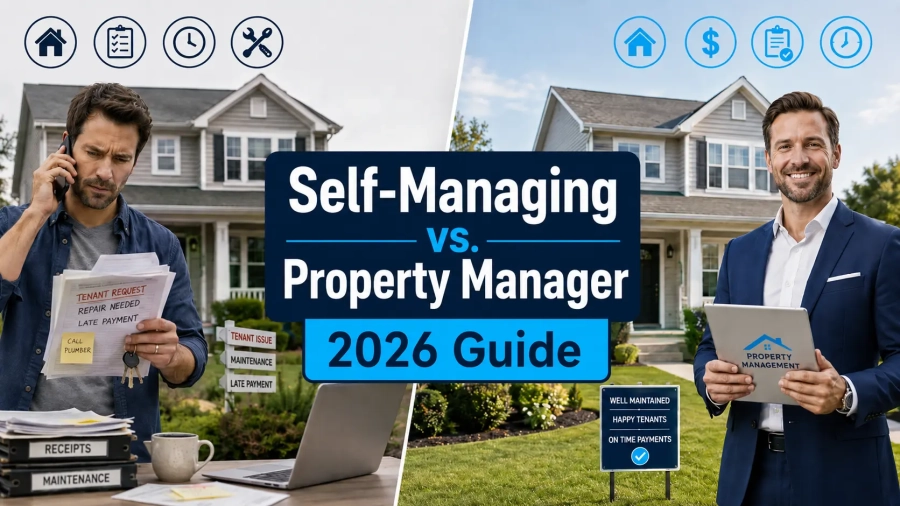
    If you are trying to decide whether to keep managing the rental yourself, review self-managing vs. hiring a property manager in OC before making the decision.

    Warning Signs a Property Manager Is Not Doing Enough

    A property manager should reduce stress and improve visibility. If the opposite is happening, something is wrong.

    Warning signs include:

    • Slow owner communication
    • Confusing statements
    • Unclear fees
    • Hidden vendor markups
    • Delayed rent payouts
    • Poor tenant follow-up
    • No maintenance transparency
    • No inspection documentation
    • Weak tenant screening
    • No clear renewal strategy
    • No owner portal or reporting visibility
    • Long-term contract pressure
    • Lack of clear cancellation options

    If you already have a manager but feel stuck, it may be time to learn how to switch property management companies without disrupting tenants, rent collection, or maintenance.

    Questions Orange County Owners Should Ask Before Hiring

    Before hiring a property manager, ask practical questions that reveal how the company actually operates.

    Use this checklist:

    • What services are included in the monthly fee?
    • Do you charge a flat rate or a percentage of rent?
    • Are there leasing, renewal, setup, or inspection fees?
    • Do you mark up vendor invoices?
    • How do you screen tenants?
    • How do you handle late rent?
    • How are maintenance requests submitted and tracked?
    • Do owners approve repairs above a certain amount?
    • How quickly are owner payouts processed?
    • Do I get real-time owner reporting?
    • How do you handle lease renewals and rent adjustments?
    • How do you document move-in and move-out condition?
    • How do you coordinate security deposits?
    • What happens if I want to cancel?
    • Are there long-term contract requirements?

    A good property manager should answer these clearly. If the answers are vague before you sign, they probably will not become clearer later.

    Conclusion: Property Managers Should Make Rental Ownership Simpler

    So, what property managers do is simple in concept but broad in execution.

    They help operate your rental property. They price it, market it, screen tenants, coordinate leases, collect rent, oversee maintenance, communicate with tenants, document inspections, manage records, support renewals, coordinate move-outs, provide owner reporting, and help reduce day-to-day stress.

    For Orange County rental owners, the right property manager should also understand California compliance pressure, tenant expectations, local market differences, HOA issues, vendor coordination, and the importance of clear reporting.

    DirectPads is built for Orange County owners who want property management to feel simpler and more transparent. With flat monthly pricing, no vendor markups, no long-term contracts, automated rent collection, maintenance visibility, and owner reporting, the goal is to help owners spend less time chasing updates and more time understanding how their rental is performing.

    If you want to know what professional management would look like for your rental, tell us about your property and request a DirectPads property management consultation. We’ll help you understand your options and decide whether flat-rate, technology-driven management makes sense for your rental.

    FAQs About What Property Managers Do

    What property managers do for landlords?

    Property managers help landlords operate rental properties. They may handle rental pricing, marketing, tenant screening, leasing, rent collection, maintenance coordination, inspections, tenant communication, lease renewals, move-outs, security deposit documentation, owner reporting, and compliance-related processes.

    What is property management?

    Property management is the day-to-day operation of a rental property on behalf of the owner. It includes tasks such as leasing, rent collection, maintenance, tenant communication, documentation, inspections, and owner reporting.

    What is the difference between a property manager and a landlord?

    The landlord owns the property or is legally responsible for it. The property manager is hired to handle management tasks for the owner. The landlord makes major ownership decisions, while the manager handles daily operations.

    Do property managers collect rent?

    Yes. Rent collection is one of the core property manager responsibilities. A manager should collect rent, track late payments, document balances, and provide owner statements.

    Do property managers handle repairs?

    Yes. Property managers typically coordinate maintenance requests, communicate with tenants, dispatch vendors, review estimates, track invoices, and confirm completion. The owner usually pays the repair cost unless the management agreement says otherwise.

    Do property managers screen tenants?

    Yes. A property manager may review applications, verify income, check credit, review rental history, contact prior landlords, and apply written screening criteria. Screening must be done consistently and in compliance with fair housing rules.

    Do property managers handle evictions?

    Property managers may coordinate documentation and communicate with attorneys, but they are not a substitute for legal counsel. Eviction filings and legal advice should be handled by qualified legal professionals.

    What do property managers charge?

    Pricing varies. Traditional companies often charge a percentage of monthly rent plus possible leasing, renewal, inspection, setup, or maintenance-related fees. DirectPads uses a flat-rate model designed for clearer pricing.

    Is flat-rate property management better?

    Flat-rate property management can be helpful for owners who want predictable pricing and dislike percentage-based fees. The best choice depends on what is included, the service level, the property type, and the owner’s goals.

    When should I hire a property manager?

    Hiring a property manager may be worth it if you lack time, live far from the property, own multiple rentals, struggle with tenant or maintenance issues, want clearer reporting, or prefer a more passive rental ownership experience.

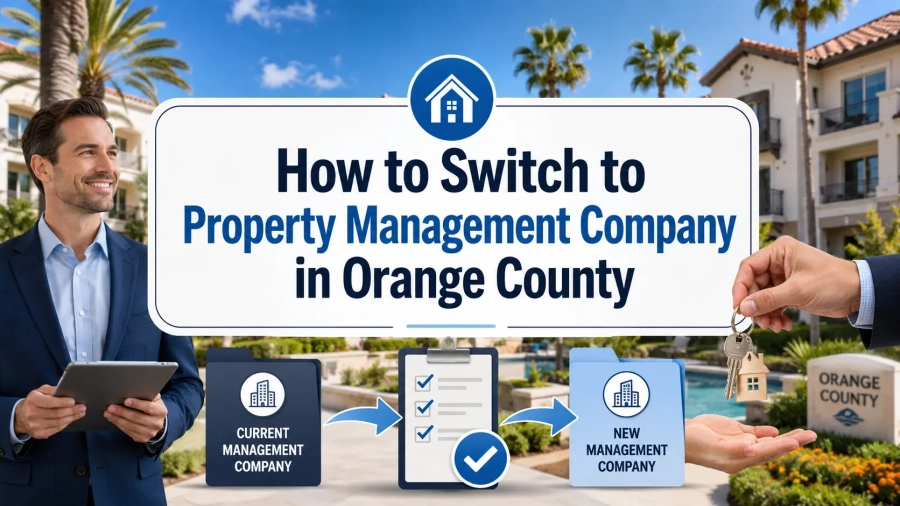
    A landlord reviewing a property management transition checklist while handing off keys, lease files, and owner reports to a new property manager.

    How to switch property management companies in Orange County without disrupting Your Rental 

    How to Change Property Management Company in Orange County Without Disrupting Your Rental

    If you own a rental property in Orange County and you are unhappy with your current property manager, you are not stuck forever.

    You can switch property management companies. The key is to do it carefully.

    A rushed transition can confuse tenants, delay rent collection, create maintenance gaps, or cause missing records. A well-planned transition, on the other hand, can give you better communication, clearer reporting, more transparent pricing, and less stress.

    This guide explains how to change property management company the right way, especially if you own a rental in Orange County and want to move from a traditional manager to a more transparent, modern property management solution.

    Table of Contents

      Can You Switch Property Management Companies?

      even if there is already a tenant living in the property.

      The tenant’s lease generally stays in place. What changes is the company responsible for managing the rental, collecting rent, coordinating maintenance, communicating with tenants, and reporting to you as the owner.

      The important part is your current property management agreement. That contract may include a required notice period, cancellation fee, termination process, final accounting requirement, or specific instructions for transferring records. Many management agreements include termination and notice provisions, so owners should review the actual signed agreement before taking action. (Source)

      For Orange County landlords, the goal is not just to leave a bad manager. The goal is to switch without disrupting rent collection, tenant communication, security deposit records, keys, maintenance requests, leases, and owner reports.

      When It May Be Time to Switch Property Managers

      Not every small issue means you need a new property manager. But repeated problems are different.

      It may be time to switch if your current manager is slow to respond, unclear with fees, weak on maintenance follow-up, inconsistent with rent collection, or unable to provide clean owner reports. You should also pay attention if you constantly feel out of the loop.

      A good property manager should make rental ownership easier. You should not have to chase basic updates, wonder where rent went, or ask repeatedly for repair details.

      This is especially important in Orange County, where rents, tenant expectations, HOA rules, vendor costs, and compliance requirements can make poor management expensive. Owners in Irvine, Anaheim, Newport Beach,Santa Ana, and Orange need a manager who can communicate clearly and keep the property organized.

      If your current frustration is mostly about pricing, unclear charges, or surprise deductions, it may also help to compare property management fees in Orange County before choosing your next company.

      Warning Signs of a Poor Property Manager

      A poor property manager does not always fail in one dramatic moment. Often, the problem is a pattern.

      Common warning signs include:

      • Slow or inconsistent communication
      • Confusing owner statements
      • Surprise fees or unexplained deductions
      • Vendor markups that were not clearly disclosed
      • Delayed maintenance coordination
      • Weak rent collection follow-up
      • Poor tenant communication
      • No clear maintenance approval process
      • No real-time owner portal or reporting visibility
      • Long-term contract pressure
      • Missing lease, ledger, inspection, or deposit records
      • No clear explanation of security deposit handling

      The biggest red flag is simple: your property manager creates more stress than they remove.

      If you are constantly asking for updates, clarifying charges, or trying to understand what is happening with your rental, it may be time to learn how to switch property management companies without disrupting your tenant or rental income.

      Step 1: Review Your Current Management Agreement

      Before you contact your current property manager, read your signed management agreement carefully.

      Look for:

      • Contract term
      • Auto-renewal language
      • Termination clause
      • Required notice period
      • Early cancellation fee
      • Leasing fee or tenant placement fee language
      • Outstanding management fees
      • Maintenance reserve requirements
      • Final accounting timeline
      • Security deposit transfer process
      • Tenant notification responsibilities
      • Record, key, lease, and ledger transfer requirements

      Do not rely on a phone call alone. If the agreement requires written notice, send written notice. If it requires notice by email, certified mail, or another method, follow that method.

      This article is for general education only and is not legal advice. If your agreement has confusing terms, large penalties, or a dispute with the current manager, speak with a qualified California attorney before terminating.

      Step 2: Choose the Right Time to Switch

      The best time to switch property management companies is when you can create a clean transition window.

      That does not always mean waiting until the lease ends. Many owners switch while a tenant is still living in the property. But timing still matters.

      A smoother transition usually happens when rent for the current month has already been collected, there is no active eviction, major repairs are either completed or clearly documented, and the new manager can onboard before the old manager fully exits.

      If there is an active tenant issue, do not ignore it just because you are switching managers. A new property manager will need the lease, rent ledger, tenant communication history, payment records, notices served, and repair history before taking over.

      If your tenant is behind on rent, review Tenant Not Paying Rent in Orange County? What Landlords Should Do First before making the transition. A rent problem can still be managed during a switch, but it needs strong documentation.

      Step 3: Gather Your Property Records

      A clean transition depends on clean records.

      Before changing property management companies, create a digital folder with all important documents. Your new manager cannot do their job well if they do not have the lease, rent ledger, deposit records, maintenance history, keys, tenant contact information, and current account balances.

      At minimum, gather:

      • Signed lease and addenda
      • Renewal agreements
      • Tenant contact information
      • Rent ledger and payment history
      • Security deposit records
      • Owner statements
      • Maintenance invoices
      • Open work orders
      • Inspection reports and photos
      • Vendor contact details
      • HOA documents, if applicable
      • Utility information
      • Insurance information
      • Keys, fobs, remotes, codes, and access credentials

      Security deposit records deserve extra attention. California Courts explain that after a tenant moves out, a landlord generally has 21 days to return the deposit or provide an itemized statement with lawful deductions, so owners need accurate deposit and condition records. (Source)

      This is one reason real-time reporting matters. DirectPads is designed around owner visibility, transparent maintenance bids and invoices, automated rent collection, and faster owner payouts, which directly addresses common owner frustrations with unclear records and slow communication.

      Step 4: Compare Your Current Manager With the New Company

      Switching property managers should not simply mean replacing one company with another. It should mean upgrading the way your rental is managed. Before choosing a replacement, it helps to clearly understand what do property managers do for landlords so you can compare services, responsibilities, pricing, reporting, and maintenance support more accurately. 

      Compare your current manager and your next manager in the areas that matter most:

      Comparison AreaWhat to Review
      PricingPercentage-based, flat-rate, hidden fees, cancellation fees
      Contract termsMonth-to-month or long-term contract
      MaintenanceVendor markups, repair approval process, invoice transparency
      Owner reportingReal-time portal, monthly statements, payout timing
      Rent collectionAutomated payments, late-rent process, owner deposits
      Tenant communicationResponse time, repair updates, lease enforcement
      DocumentationLease files, ledgers, deposits, inspections, notices
      FlexibilityAbility to cancel, transition support, onboarding process

      Step 5: Send Written Termination Notice

      Once you understand your agreement and have selected your next step, send written termination notice to your current property manager.

      Keep it professional and direct. Include your name, property address, the date, the management company’s name, the effective termination date, and a request for final accounting and record transfer.

      Ask for the transfer of leases, tenant ledgers, security deposit records, keys, maintenance history, inspection reports, vendor invoices, open work orders, owner statements, and tenant communication records.

      This is not the time to send an emotional complaint letter. Even if you are frustrated, keep the goal in mind: a clean handoff.

      Document everything. Save copies of the notice, confirmation of receipt, email threads, final statements, and transferred records.

      Step 6: Protect Tenant Communication

      Tenant confusion is one of the biggest risks during a property management transition.

      Your tenant should clearly understand:

      • When the change takes effect
      • Who the new property manager is
      • Where to pay rent
      • How to submit maintenance requests
      • Who to contact for emergencies
      • Whether the lease terms remain the same
      • Whether the payment portal is changing

      The message should be simple. Tenants do not need a long explanation about why you changed managers. They need clear instructions.

      A good notice might explain that property management is changing on a specific date, the lease remains active, future rent should be paid through the new system, and maintenance requests should go through the new contact method.

      California’s Department of Real Estate provides a 2026 Landlord/Tenant Guide covering rental agreements, notices, security deposits, repairs, privacy, and moving out, which is useful for owners who want to stay aligned with current landlord-tenant responsibilities.

      The most important rule: make sure tenants do not receive conflicting payment instructions from the old manager, new manager, and owner.

      Step 7: Transfer Rent, Deposits, Keys, Leases, and Records

      This is the most important part of the transition.

      Rent collection

      Confirm the last rent payment collected by the old manager and the date the new rent collection system begins. If the tenant has automatic payments, make sure they cancel the old setup and activate the new one before the next due date.

      Security deposits

      Confirm the deposit amount, where it is held, and how it will transfer. Deposit records should match the lease, ledger, and move-in documentation. Poor deposit records can become a problem later when the tenant moves out.

      Leases and tenant files

      The new manager should receive the signed lease, addenda, renewal terms, rent amount, deposit amount, occupants, pets, parking information, HOA rules, utility responsibilities, and any special agreements.

      Keys and access

      Keys, fobs, mailbox keys, garage remotes, gate remotes, smart lock codes, alarm codes, and HOA access items should be logged. If access records are messy, ask whether rekeying or updating codes is appropriate.

      Maintenance history

      Transfer open work orders, completed repair invoices, inspection photos, vendor estimates, warranties, and unresolved tenant complaints. Maintenance should not disappear just because management changed.

      California rental compliance continues to evolve, so keeping maintenance records matters. For example, state landlord-tenant guidance and housing compliance updates can affect habitability and repair responsibilities, and property-specific issues may vary by lease, property type, city, and HOA.

      If maintenance confusion is one of the reasons you are switching, AI-powered maintenance for rental properties may be worth exploring because it helps organize requests, updates, invoices, and owner visibility.

      Step 8: Avoid Rent and Maintenance Disruptions

      A successful transition is one where the tenant barely feels the change.

      To avoid rent disruption, the new manager should send payment instructions before the next rent due date. The tenant should know exactly when the old portal stops and when the new portal starts.

      To avoid maintenance disruption, identify open repairs before the transition date. A leaking sink, appliance issue, HVAC problem, roof concern, or tenant complaint should not get lost between managers.

      To avoid owner reporting issues, request a final statement from the old manager and a beginning balance from the new manager. Rent collected, management fees, repair invoices, security deposits, maintenance reserves, and tenant balances should all be clear.

      This is where DirectPads’ real-time owner reporting and transparent maintenance visibility can make a real difference. Owners should not have to guess where rent went, what repairs are open, or why a payout is delayed.

      Why Transparent Pricing and Real-Time Reporting Matter

      The transition process reveals how organized a property management company really is.

      If your current manager cannot quickly provide ledgers, deposits, leases, invoices, or maintenance records, that tells you something. If the new company cannot explain onboarding clearly, that also tells you something.

      Transparent pricing matters because switching is already a moment of uncertainty. You should not move from one unclear fee structure into another.

      Real-time reporting matters because you need confidence that rent, repairs, deposits, and records are being handled correctly. Automated rent collection matters because payment confusion can delay owner payouts. No vendor markups matter because many owners switch after feeling overcharged or left in the dark about repairs.

      This matters even more in Orange County, where rental owners often deal with high-value properties, competitive rental demand, city-by-city market differences, HOA requirements, and California rental compliance rules. When a property manager lacks clear pricing, organized reporting, or strong maintenance systems, those small gaps can quickly become expensive.

      DirectPads was built around these owner concerns: flat monthly pricing, no hidden fees, no vendor markups, no long-term contracts, automated rent collection, AI-powered maintenance workflows, real-time owner reporting, faster owner payouts, and a simpler way to manage rentals with less stress.


      Common Mistakes to Avoid When Switching Property Managers

      Switching property managers can be smooth if you stay organized. The biggest mistakes usually come from rushing or assuming the old manager will handle everything correctly without oversight.

      Avoid these mistakes:

      • Terminating before reviewing the agreement
      • Ignoring the required notice period
      • Forgetting about cancellation fees
      • Failing to collect tenant ledgers and lease files
      • Not confirming security deposit records
      • Sending tenants unclear payment instructions
      • Allowing two managers to collect rent at the same time
      • Failing to transfer keys, fobs, and access codes
      • Losing maintenance history
      • Not checking open vendor invoices
      • Not getting final owner statements
      • Choosing a new manager based only on the lowest fee

      The safest approach is to slow down, organize the records, choose the new manager carefully, and set one clear effective date.

      Thinking about switching managers? DirectPads can review your current setup and show you whether flat-rate management makes sense for your Orange County rental.


      Final Next Steps for Orange County Rental Owners

      If you are ready to change property management companies, start with a simple plan.

      First, review your current management agreement. Look for termination terms, notice requirements, cancellation fees, auto-renewal language, deposit handling, and final accounting obligations.

      Second, gather your lease, tenant ledger, owner statements, inspection records, maintenance history, deposit records, vendor invoices, keys, access codes, and tenant contact information.

      Third, compare replacement managers based on transparency, pricing structure, reporting, maintenance workflow, contract flexibility, and communication standards.

      Fourth, choose the new manager before the old manager fully exits. A gap between managers can create rent collection, tenant communication, and repair problems.

      Finally, send written notice according to your agreement and make sure the tenant receives clear instructions before the next rent due date.

      For owners who live outside the area, the transition deserves even more structure. If you do not live near the property, review managing an Orange County rental while living out of state before switching. Distance makes communication, access, maintenance, and tenant coordination even more important.

      Conclusion: Switching Property Managers Should Make Ownership Simpler

      Changing property management companies is not something to do casually, but it is also not something to fear.

      If your current manager is slow to respond, unclear with fees, inconsistent with repairs, weak on reporting, or difficult to cancel, switching may be the right business decision.

      The key is to handle the transition professionally. Review your agreement. Follow the notice requirements. Gather your records. Protect tenant communication. Confirm rent collection. Transfer deposits, keys, leases, maintenance records, and financial reports. Choose a new manager with clear systems.

      For Orange County landlords, the right property management company should make ownership easier, not more confusing.

      DirectPads is designed for rental owners who want a simpler alternative to traditional management: flat monthly pricing, no hidden fees, no vendor markups, no long-term contracts, automated rent collection, AI-powered maintenance workflows, real-time reporting, faster owner payouts, and less stress.

      Tell us about your property and request a DirectPads property management consultation. We’ll help you compare your current setup, understand your transition options, and decide whether a flat-rate, technology-driven management model makes sense for your rental.

      Want to know what property management would cost for your rental? Tell us about your property and request a
      Free Rental Analysis. We’ll help you compare your current costs, understand your options, and see whether flat-rate, technology-driven management makes sense for your rental.

      FAQs About How to Change Property Management Company

      Can I switch property management companies while a tenant is still in the property?

      Yes. In many cases, you can switch property management companies while a tenant is still occupying the rental. The lease usually remains in place, but the tenant must receive clear instructions about who manages the property, where to pay rent, and how to submit maintenance requests.

      How do I change property management company without disrupting rent collection?

      Review your current agreement, choose the new manager before the old one exits, send proper written termination notice, and notify tenants before the next rent due date. Make sure the old and new payment systems do not overlap.

      Do I need to wait until the lease ends to switch property managers?

      Usually, no. You can often switch managers during an active lease because the management agreement is separate from the tenant lease. However, your management agreement may have its own notice period, cancellation fee, or termination clause.

      What documents should I collect before switching property managers?

      Collect the lease, addenda, rent ledger, tenant contact details, security deposit records, owner statements, maintenance history, inspection reports, vendor invoices, keys, access codes, HOA documents, notices, and unresolved tenant or repair issues.

      What happens to the tenant’s security deposit when I switch managers?

      The security deposit record should transfer accurately. Confirm the deposit amount, where it is held, whether any claims exist, and how the funds or records will be transferred to the owner or new manager. California security deposit rules are strict, so careful documentation matters.

      Can my current property manager charge a cancellation fee?

      Possibly. Your signed agreement controls whether a cancellation fee applies. Review the termination clause, notice period, auto-renewal language, and early termination terms before sending notice.

      What should tenants be told during a management transition?

      Tenants should be told the effective date of the change, the new manager’s contact information, where to pay rent, how to submit maintenance requests, and whether emergency contact procedures are changing.

      What if my current property manager refuses to provide records?

      Start by making a written request for leases, ledgers, deposits, keys, invoices, maintenance records, and final accounting. If the manager refuses or delays, review your agreement and consider speaking with a qualified attorney.

      How long does it take to switch property management companies?

      The timeline depends on your current agreement, notice period, tenant situation, and record transfer. Many transitions are shaped by the notice period in the management agreement, so read your contract first.

      Why choose DirectPads when switching property managers?

      DirectPads may be a good fit for owners who want flat monthly pricing, no hidden fees, no vendor markups, no long-term contracts, automated rent collection, AI-powered maintenance workflows, real-time owner reporting, faster owner payouts, and a simpler way to manage rentals with less stress.

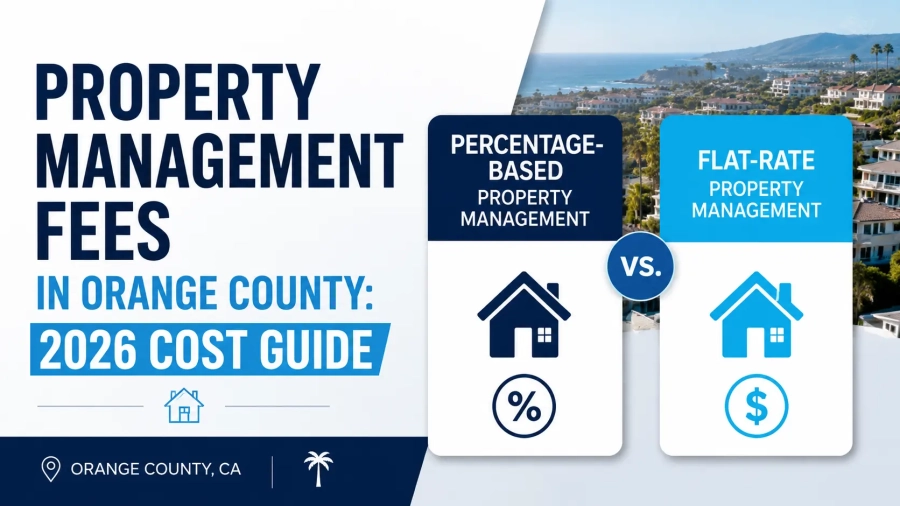
      A clean pricing comparison graphic showing percentage-based property management vs. flat-rate property management for an Orange County rental.

      Property Management Fees in Orange County: 2026 Cost Guide

      How Much Does Property Management Cost in Orange County? 2026 Fee Guide

      If you own a rental property in Orange County, one of the first questions you’ll probably ask before hiring a property manager is simple:

      How much is this going to cost me?

      The honest answer is that property management pricing depends on the company, the property type, the rent amount, and what services are included. In Orange County, many residential property management companies charge a monthly fee based on a percentage of rent, commonly around 7% to 10%, although some companies may charge lower or higher depending on the service model. Broader industry pricing sources also commonly place long-term rental management fees around 8% to 12% of monthly rent. 

      But the monthly percentage is only part of the real cost.

      Leasing fees, renewal fees, setup charges, inspection fees, maintenance markups, vacancy fees, and cancellation terms can all affect what you actually pay. That is why Orange County landlords should compare the full annual cost, not just the advertised monthly rate.

      This guide breaks down what rental property owners should expect, which fees are normal, which fees deserve closer review, and how to compare property management companies with more confidence. If you are still deciding whether the cost is worth it at all, it may also help to compare self-managing vs. hiring a property manager in OC before choosing a service model.

      Table of Contents

        Quick Answer: Property Management Fees in Orange County

        Most Orange County property management companies charge a monthly management fee, usually based on a percentage of rent collected. A common range is around 7% to 10% for many full-service long-term residential rentals, but pricing can vary based on the property, rent amount, company, and service level. (Source)

        Here is a simple breakdown:

        Fee TypeCommon RangeWhat It Usually Covers
        Monthly management fee7%–10% of rent is commonRent collection, tenant communication, maintenance coordination, owner reporting
        Leasing fee50%–100% of one month’s rent is commonMarketing, showings, screening, lease preparation, move-in coordination
        Lease renewal fee$200–$500 is common in some local pricing modelsRenewal paperwork, rent review, tenant communication
        Setup fee$0–$500Account setup, document review, owner portal setup
        Inspection feeVaries by companyMove-in, move-out, annual, or mid-lease inspections
        Maintenance markupVaries by companyAdded fee or markup on vendor invoices
        Eviction coordination feeVariesAdmin support, documentation, attorney coordination

        The key point is simple:

        The lowest monthly percentage is not always the cheapest option.

        A company that advertises a low monthly rate may still charge extra for leasing, renewals, inspections, vendor coordination, notices, or cancellations. A company with a higher visible fee may actually be more transparent if more services are included.

        Monthly Management Fees

        The monthly management fee is the recurring fee paid to the property management company for handling the day-to-day operation of your rental.

        This usually covers the core work of managing the property, including rent collection, tenant communication, maintenance coordination, owner statements, lease enforcement support, basic accounting, coordination with tenants and vendors, and general rental oversight.

        For example, if your rental property collects $3,500 per month and the management fee is 8%, your monthly management cost would be $280.

        At 10%, the same property would cost $350 per month.

        Monthly Rent7% Fee8% Fee10% Fee
        $2,500$175$200$250
        $3,500$245$280$350
        $4,500$315$360$450
        $5,500$385$440$550

        For higher-rent properties in Irvine, Newport Beach,Huntington Beach, and Costa Mesa, percentage-based pricing can become expensive quickly.

        That does not automatically mean percentage-based pricing is bad. It simply means owners should understand exactly what they are paying for.

        Percentage-Based vs. Flat-Rate Pricing

        Most traditional property management companies charge a percentage of monthly rent. This model is common because it is easy to understand and scales with the rental income.

        However, percentage-based pricing can become less attractive for higher-rent homes. A $5,000 rental does not always require twice as much monthly management work as a $2,500 rental, but a percentage-based fee may charge significantly more.

        Flat-rate property management works differently. Instead of charging a percentage of rent, the company charges a fixed monthly amount.

        Flat-rate pricing may be a better fit if your rental has above-average rent, you want predictable monthly costs, you dislike percentage-based fees, you want clearer billing, or you prefer a simpler pricing structure with fewer surprise charges.

        DirectPads uses a flat-rate, technology-driven property management model designed for owners who want clear pricing, no hidden fees, no vendor markups, automated rent collection, real-time reporting, and less day-to-day stress. For owners comparing both models, a deeper guide on flat-rate vs. percentage-based property management can help clarify which structure may save more over time.

        This is especially appealing for owners who are tired of traditional property management pricing that feels unclear or difficult to compare.

        Example Cost Breakdown

        Let’s say your Orange County rental property rents for $3,500 per month.

        Here is what your annual monthly management fee could look like:

        Management RateMonthly CostAnnual Cost
        7%$245$2,940
        8%$280$3,360
        10%$350$4,200
        12%$420$5,040

        Now add a leasing fee.

        If the leasing fee is 50% of one month’s rent, that adds $1,750. If the leasing fee is equal to one full month’s rent, that adds $3,500.

        That means your first-year cost may look like this:

        ScenarioAnnual Management FeeLeasing FeeFirst-Year Total
        7% + 50% leasing fee$2,940$1,750$4,690
        8% + 50% leasing fee$3,360$1,750$5,110
        10% + full-month leasing fee$4,200$3,500$7,700
        12% + full-month leasing fee$5,040$3,500$8,540

        This is why landlords should never compare property managers based on the monthly percentage alone.

        The better question is:

        What will I pay during the first year, and what will I pay during a normal renewal year?

        The first year is often more expensive because it may include leasing, onboarding, inspection, and tenant placement work. If the tenant renews, the second year may cost less.

        Leasing and Tenant Placement Fees

        A leasing fee, sometimes called a tenant placement fee, is charged when the property manager finds a new tenant for the rental.

        This fee may cover rental pricing strategy, listing creation, online advertising, showing coordination, tenant screening, credit and background checks, income verification, rental history review, lease preparation, move-in coordination, and security deposit handling.

        Leasing fees often range from 50% to 100% of one month’s rent, depending on the company and what services are included. (Source)

        A leasing fee is not automatically a bad thing. In fact, placing the right tenant is one of the most important parts of property management. A poorly screened tenant can cost far more than the leasing fee through late rent, property damage, vacancy, legal issues, or early turnover.

        Still, owners should ask:

        • When is the leasing fee charged?
        • Is it due only after a tenant is placed?
        • What screening is included?
        • Is lease preparation included?
        • Are property photos or advertising included?
        • Is there a tenant placement guarantee?
        • What happens if the tenant breaks the lease early?

        A major red flag is a large leasing fee charged before meaningful leasing work is completed.

        Because leasing is closely tied to risk, landlords should also understand how to screen tenants legally in California before comparing tenant placement fees.

        Lease Renewal Fees

        A lease renewal fee is charged when an existing tenant signs a new lease.

        This fee may cover reviewing market rent, recommending renewal terms, communicating with the tenant, updating lease documents, collecting signatures, updating owner records, and reducing vacancy risk.

        Some local pricing sources show renewal fees around $200 to $500, though the exact fee depends on the company and scope of work. (Source)

        A renewal fee can be worthwhile if the manager is doing more than sending paperwork. A good renewal process should evaluate whether the rent is still competitive, whether the tenant has performed well, and whether renewing is better than turning over the property.

        The question to ask is simple:

        What exactly do you do for the renewal fee?

        If the answer is vague, that fee deserves a closer look.

        Setup and Administrative Fees

        Some property management companies charge a setup or onboarding fee. Others waive it.

        A setup fee may cover owner portal setup, property file creation, lease review, tenant ledger setup, bank connection, payment setup, document collection, initial onboarding, or transition from another manager.

        The fee itself is not always the problem. The problem is unclear billing.

        Before signing, ask:

        • Is the setup fee one-time or recurring?
        • Is it charged per property or per unit?
        • Is it refundable if onboarding is not completed?
        • Are there separate technology or admin fees?
        • What exactly is included?

        DirectPads helps simplify this part of the process with $0 setup fees, month-to-month service, and no long-term contracts.

        That kind of pricing clarity matters, especially for owners who are already frustrated with unclear property management charges.

        Maintenance Coordination and Vendor Markups

        Maintenance is one of the most important areas to review before choosing a property manager.

        A monthly management fee may include basic maintenance coordination, but the actual repair cost is usually paid by the owner. Some companies also charge a markup on vendor invoices.

        Maintenance coordination can include receiving tenant repair requests, troubleshooting simple issues, dispatching vendors, reviewing estimates, getting owner approval above a certain threshold, coordinating tenant access, tracking invoices, confirming completion, and updating owner records.

        Some property managers charge no vendor markup. Others may add a percentage or coordination fee to maintenance invoices.

        Here is the strong opinion: vendor markups should never be hidden.

        If a management company adds a maintenance markup, coordination fee, referral fee, or vendor incentive, that should be clearly disclosed in writing.

        Owners should ask:

        • Do you mark up vendor invoices?
        • Can I see the original vendor invoice?
        • Do I approve repairs above a certain amount?
        • Do you use licensed and insured vendors?
        • Is there a maintenance reserve?
        • Do you receive rebates or referral fees from vendors?
        • How are emergency repairs handled?

        DirectPads’ no-vendor-markup model is a major advantage for owners who want transparent maintenance costs and better visibility into repair decisions. For landlords who want more speed and less confusion, AI-powered maintenance for rental properties can also help reduce the stress of handling repairs manually.

        Inspection Fees

        Inspections help protect the property and document its condition.

        Common inspection types include:

        • Move-in inspection
        • Move-out inspection
        • Annual inspection
        • Mid-lease inspection
        • Exterior inspection
        • Maintenance inspection
        • Post-repair inspection

        For Orange County rentals, inspections are especially important for single-family homes, condos, coastal properties, older rentals, and HOA-governed properties. A small leak, unauthorized pet, lease violation, or deferred repair can become expensive if it goes unnoticed.

        A property manager should be able to explain how often inspections happen, whether they are included or billed separately, whether photos are provided, how findings are reported, and whether move-in and move-out documentation is included.

        California landlords also need to follow proper rules before entering an occupied rental. The California Department of Real Estate provides a 2026 landlord-tenant guide covering landlord and tenant rights and responsibilities. 

        Legal and Eviction Coordination Fees

        Eviction-related services are usually not included in the standard monthly management fee.

        A property manager may help with documentation, tenant communication, notice coordination, attorney coordination, timeline tracking, move-out coordination, and owner updates. However, property managers are not a substitute for legal counsel. If an eviction, dispute, or legal claim occurs, owners should work with a qualified attorney.

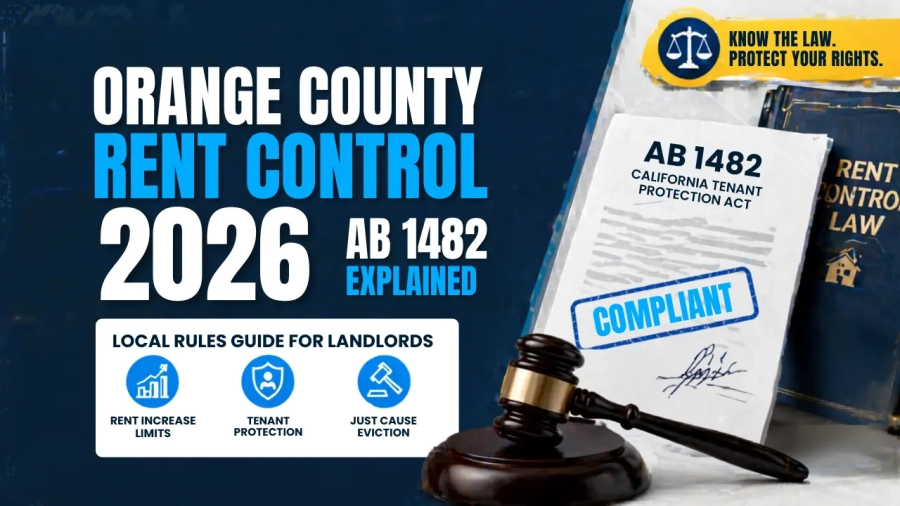
        California rental law is compliance-heavy. Many residential rentals may be subject to California’s Tenant Protection Act, which includes rent cap and just-cause eviction rules unless an exemption applies. The California Department of Justice explains that the Tenant Protection Act generally caps rent increases for many covered units at 5% plus the cost-of-living change or 10%, whichever is lower. (Source)

        Owners should ask:

        • What eviction-related services are included?
        • What is billed separately?
        • Are attorney fees separate?
        • Who prepares notices?
        • Who chooses the attorney?
        • How are tenant communications documented?

        Legal coordination fees are not always avoidable, but they should be clearly explained before a problem happens. If rent collection or nonpayment becomes an issue, owners may also want to review what to do when a tenant is not paying rent in Orange County and what to expect from the Orange County eviction timeline.

        Hidden Fees to Watch For

        Before signing a property management agreement, ask for a complete fee schedule.

        Watch for:

        • Vacancy fees
        • Marketing fees
        • Photography fees
        • Lease preparation fees
        • Notice posting fees
        • Technology fees
        • Annual statement fees
        • Maintenance markups
        • Emergency coordination fees
        • HOA coordination fees
        • Insurance claim coordination fees
        • Court appearance fees
        • Cancellation fees
        • Early termination fees
        • Reserve fund requirements

        The biggest mistake landlords make is comparing one company’s 8% monthly fee to another company’s 10% monthly fee without comparing the full fee structure.

        A “cheaper” manager can become more expensive if every normal task is billed separately.

        A transparent company should be able to explain the full cost before you sign.

        What Should Be Included in Full-Service Property Management?

        A full-service property management company should do more than collect rent.

        At minimum, full-service management should usually include leasing and marketing, tenant screening, rent collection, accounting, maintenance coordination, lease management, compliance awareness, inspections, and owner communication.

        Leasing and marketing may include rent-price analysis, listing creation, marketing, showings, lead follow-up, and application processing. Tenant screening should review credit, income, rental history, employment, and other lawful criteria.

        Rent collection and accounting should include online rent collection, late-payment tracking, owner statements, invoice records, and direct deposits. DirectPads also emphasizes automated rent collection, faster owner payouts, and real-time owner reporting.

        Maintenance coordination should include repair request handling, vendor dispatch, estimate review, invoice tracking, and owner communication. Lease management should include renewals, notices, rent increases, documentation, and awareness of California landlord-tenant requirements. Managers should not replace attorneys, but they should have disciplined systems.

        Owners should not have to chase basic updates. A strong company should provide clear communication, owner portal visibility, maintenance updates, and transparent reporting.

        What Affects Property Management Pricing in Orange County?

        Several factors can affect your final cost.

        Property type

        Single-family homes, condos, townhomes, duplexes, and small multifamily buildings may be priced differently. A condo may involve HOA coordination. A single-family home may require more exterior maintenance. Multifamily properties may qualify for per-unit or portfolio pricing.

        Location

        Pricing and service needs may vary across Irvine, Anaheim, Newport Beach, Huntington Beach, Costa Mesa, Santa Ana, Fullerton, Orange, and Laguna Beach.

        Coastal homes may have higher rents and higher repair costs. Inland properties may have different tenant demand and leasing timelines.

        Rent amount

        The higher the rent, the more expensive percentage-based pricing becomes. This is one reason flat-rate pricing can make sense for higher-rent properties.

        Property condition

        Older homes or rentals with deferred maintenance often require more coordination. If the property has aging plumbing, old appliances, roof concerns, or frequent tenant complaints, management may require more work.

        Service level

        Basic rent collection should cost less than full-service management. If you want leasing, inspections, maintenance, reporting, compliance support, and owner communication, compare full-service packages.

        Number of units

        Owners with multiple rentals may qualify for bundled or portfolio pricing.

        For owners managing a property from outside the area, pricing should also be weighed against the practical challenges of managing an Orange County rental while living out of state.

        Savings Calculator: How Much Are You Overpaying Your Property Manager?

        $1,500
        Typical PM at 10%
        $150
        per month
        DirectPads Essential
        $199
        per month, flat
        Your annual savings
        $0
        vs a typical PM
        Based on 10% management fee. Typical SoCal PMs charge 8–12%. Excludes placement fees, renewal fees, and vendor markups — which most PMs also charge.
        Get started — keep more of your rent →
        $0 setup · No contract · Cancel anytime

        If you already have a property manager, the monthly percentage may not show the full cost.

        Your real annual cost may include:

        • Monthly management fees
        • Leasing fees
        • Renewal fees
        • Inspection fees
        • Maintenance markups
        • Vacancy fees
        • Admin charges
        • Cancellation fees

        How to Compare Orange County Property Management Companies

        Do not compare companies based only on the monthly rate.

        Compare these instead:

        1. Complete fee schedule

        Ask for every possible charge in writing. If the company only gives you the monthly percentage, ask for the full fee schedule.

        2. What is included

        Two companies may both charge 8%, but one may include more services while the other bills separately for normal tasks.

        3. Contract terms

        Review:

        • Contract length
        • Cancellation terms
        • Leasing fee timing
        • Maintenance approval limits
        • Reserve requirements
        • Owner payout schedule
        • Reporting schedule
        • Vendor policy
        • Eviction coordination process

        DirectPads offers month-to-month service, no long-term contracts, and cancel-anytime flexibility, which can be helpful for owners who do not want to feel locked in.

        4. Maintenance transparency

        Ask whether vendor invoices are marked up and whether you can see original bids and invoices.

        5. Owner reporting

        Ask for a sample owner statement or dashboard. If a company cannot show you how reporting works, be cautious.

        6. Local experience

        A property manager should understand Orange County rental expectations, HOA issues, rent differences, tenant demand, and local market behavior.

        If you already have a manager but feel frustrated by unclear pricing, poor communication, or surprise charges, it may be time to understand how to switch property management companies without disrupting tenants, rent collection, or maintenance.

        Red Flags in Property Management Pricing

        Be careful if you see:

        • Vague pricing
        • No written fee schedule
        • Very low advertised rates with many add-ons
        • Leasing fees charged before performance
        • Hidden maintenance markups
        • No clear cancellation terms
        • Long-term contract pressure
        • No owner reporting sample
        • Poor communication before signing
        • No clear explanation of what is included

        If a company is hard to understand before you sign, it probably will not feel clearer after you sign.

        Good property management should make ownership simpler, not more confusing.

        How to Lower Your Property Management Costs Without Choosing the Cheapest Company

        The goal is not to hire the cheapest property manager. The goal is to lower your real cost while protecting your rental.

        Well-maintained rentals usually lease faster, attract better tenants, and create fewer emergency repairs. Pricing rent correctly also matters because overpricing can increase vacancy while underpricing leaves money on the table. In a high-rent market like Orange County, pricing mistakes can be expensive.

        Owners should also prioritize quality tenants over fast tenant placement. Strong screening protects cash flow and reduces future problems. If your rent is high, flat monthly pricing may cost less than percentage-based pricing, especially when the company also avoids hidden maintenance markups.

        The best comparison is annual cost, not monthly percentage. Ask every company: “What would my estimated first-year cost be, including leasing, renewals, inspections, and maintenance markups?”

        Technology can also reduce friction. Automated rent collection, AI-powered maintenance workflows, owner portals, transparent invoices, and faster payouts can reduce stress and improve visibility.

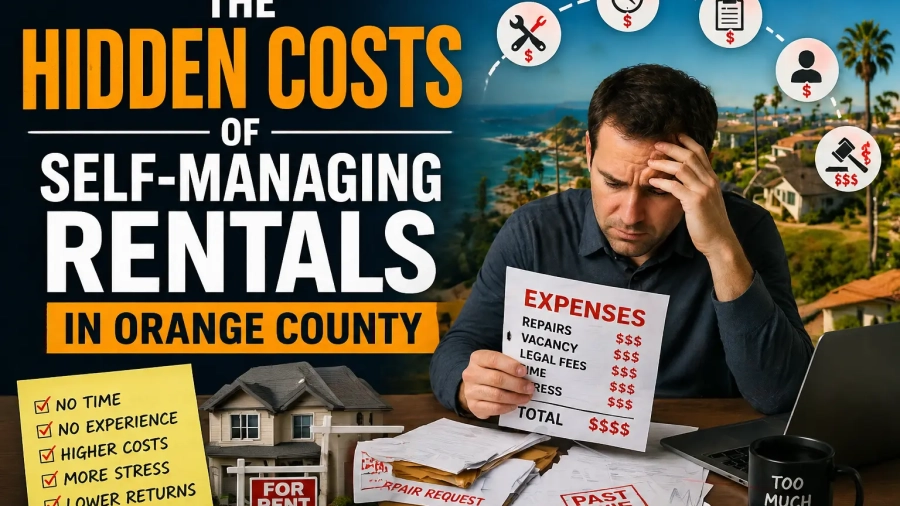
        For owners comparing total value, it may also help to understand the hidden costs of self-managing a rental property in Orange County because doing everything yourself can have costs that do not show up as a monthly invoice.

        The Bottom Line: What Should Orange County Landlords Expect to Pay?

        Most Orange County landlords should expect property management costs to include a monthly management fee plus possible leasing, renewal, inspection, maintenance, and administrative fees.

        A common monthly range for many full-service long-term rentals is around 7% to 10%, though pricing can vary by company, property type, rent amount, service level, and contract structure. Leasing fees are often one of the largest first-year costs and may range from 50% to 100% of one month’s rent. (Source)

        But the best property manager is not always the cheapest.

        The right company should provide:

        • Transparent pricing
        • A complete fee schedule
        • Strong tenant screening
        • Clear maintenance workflows
        • No surprise markups
        • Reliable rent collection
        • Fast owner payouts
        • Real-time reporting
        • Local market knowledge
        • Clear cancellation terms
        • Less stress

        If you want a more transparent alternative to traditional percentage-based pricing, DirectPads is built for Orange County and Southern California rental owners who want flat monthly pricing, no hidden fees, no vendor markups, no long-term contracts, automated rent collection, AI-powered maintenance workflows, and real-time owner visibility.

        How we compare
        DirectPadsTypical PM firm
        Monthly fee$199–$299 flat8–12% of rent
        Tenant placement$0 or $1,500 flat50–100% of 1 month
        Repair coordination$0 or 5% over $1K10–20% markup
        Lease renewal fee$0$200–$500
        Setup fee$0$200–$500
        Contract lengthMonth-to-month12–24 months
        Vendor invoicesFull transparencyMarked up
        Owner portalReal-time accessMonthly PDF

        Want to know what property management would cost for your rental? Tell us about your property and request a
        Free Rental Analysis. We’ll help you compare your current costs, understand your options, and see whether flat-rate, technology-driven management makes sense for your rental.

        Frequently Asked Questions About Property Management Fees in Orange County

        What is the average property management fee in Orange County?

        Many Orange County property management companies charge around 7% to 10% of monthly rent for full-service long-term residential management, although pricing can vary based on the property, service level, and company.

        How much is a leasing or tenant placement fee?

        Leasing fees often range from 50% to 100% of one month’s rent, depending on what services are included and when the fee is charged.

        Are property management fees tax deductible?

        Rental property owners can generally deduct expenses related to renting property from rental income, but owners should confirm their specific tax situation with a CPA or tax professional. The IRS provides guidance on rental income, expenses, and recordkeeping.

        Do property managers charge when the property is vacant?

        Some companies charge vacancy fees, while others only charge when rent is collected. Always ask whether the monthly fee is based on collected rent or scheduled rent.

        Are maintenance costs included in property management fees?

        Usually, no. The management fee may cover coordination, but the owner typically pays the actual repair cost. Some companies may also charge a maintenance markup.

        Is flat-rate property management better than percentage-based pricing?

        It depends on the property. Flat-rate pricing can be better for higher-rent homes or owners who want predictable costs. Percentage-based pricing may still make sense when the included service level justifies the fee.

        What hidden fees should landlords watch for?

        Watch for setup fees, renewal fees, vacancy fees, inspection fees, maintenance markups, cancellation fees, technology fees, notice fees, and administrative charges.

        How much does property management cost for a $3,500 rental?

        At 8%, monthly management would cost $280 per month, or $3,360 per year before leasing or other fees. If the leasing fee is 50% of one month’s rent, that adds $1,750 in the first year.

        What should be included in full-service property management?

        Full-service management should usually include rent collection, tenant communication, maintenance coordination, owner reporting, leasing support, tenant screening, inspections, and general property oversight.

        How do I compare property management companies in Orange County?

        Compare the full fee schedule, included services, contract terms, maintenance markup policy, owner reporting, local experience, cancellation terms, and communication standards. Do not choose based only on the lowest monthly percentage.

        A split-screen image showing a stressed DIY landlord on one side and a calm property manager reviewing rental reports on the other

        Self-Managing vs. Hiring a Property Manager in Orange County

        Self-Managing vs. Hiring a Property Manager in Orange County: Is It Worth It in 2026?

        Table of Contents

          Quick Answer: Is Hiring a Property Manager Worth It?

          For many Orange County rental property owners, hiring a property manager can be worth it when the owner lacks time, lives far from the property, struggles with tenant issues, is unsure about California rental laws, or wants a more professional system for leasing, rent collection, maintenance, inspections, and documentation.

          Self-management can work. Some landlords are organized, local, legally informed, responsive, and comfortable dealing with tenants. But the real question is not simply, “Can I save the management fee?” The better question is:

          Is self-management saving you money, or quietly costing you time, rent, peace of mind, and legal exposure?

          In a high-value rental market like Orange County, one bad tenant, one prolonged vacancy, one mishandled security deposit, or one poorly documented dispute can cost far more than a monthly management fee.

          This article breaks down both options clearly so you can decide what makes sense for your rental property in 2026.

          What Self-Managing an Orange County Rental Really Involves

          Self-managing a rental is not just collecting rent once a month. A rental owner who self-manages is responsible for almost every operational, financial, and tenant-facing part of the property.

          That usually includes:

          • Advertising the rental
          • Pricing the property correctly
          • Responding to inquiries
          • Showing the property
          • Screening applicants
          • Preparing and signing lease documents
          • Collecting rent
          • Handling late payments
          • Serving proper notices when needed
          • Coordinating repairs
          • Responding to emergencies
          • Conducting move-in and move-out inspections
          • Managing security deposits
          • Keeping records
          • Handling tenant communication
          • Staying updated on California landlord-tenant rules

          For owners in Irvine, Anaheim, Newport Beach, Santa Ana, and other parts of Orange County, self-management also means understanding city-by-city differences, HOA expectations, market pricing, tenant expectations, and vendor availability.

          A property manager does not remove every owner’s responsibility, but a good manager creates systems so the owner is not personally handling every call, repair, deadline, and tenant issue.

          Self-Managing vs. Hiring a Property Manager: Side-by-Side Comparison

          CategorySelf-ManagingHiring a Property Manager
          Time requiredHighLower for the owner
          Upfront costLowerManagement fee applies
          Tenant screeningOwner handles processProfessional screening system
          Rent collectionOwner follows upManager enforces payment process
          MaintenanceOwner finds and coordinates vendorsManager coordinates vendors
          Legal complianceOwner must track rulesManager uses established procedures
          Vacancy managementOwner markets and shows propertyManager handles leasing process
          DocumentationOwner must maintain recordsManager usually documents communication, inspections, notices, and expenses
          Stress levelCan be highUsually lower
          Best fitLocal, experienced, hands-on ownerBusy owner, out-of-area owner, investor, or owner wanting less risk

          The better option depends on your property, experience, schedule, risk tolerance, and long-term investment goals.

          The Real Cost of Self-Managing a Rental Property

          Many landlords choose self-management because they want to avoid paying property management fees. That is understandable. But the visible cost is only one part of the equation.

          The hidden costs of self-management may include:

          • Lost rent from longer vacancy
          • Underpricing the rental
          • Accepting a weak tenant due to rushed screening
          • Slow response to maintenance issues
          • Paying too much for vendors
          • Poor documentation during disputes
          • Missed legal deadlines
          • Stress from late-night or workday tenant calls
          • Time spent coordinating repairs, inspections, and renewals

          In Orange County, where rents are relatively high, even a short vacancy can be expensive. RentCafe reports the average apartment rent in Orange County at about $2,865, while USA TODAY’s apartment rental data reported overall rent around $2,567 for Orange County in April 2026; exact rent varies by unit type, city, neighborhood, and data source.

          This is why the self-management decision should not be based only on the monthly management fee. It should be based on net performance, risk control, and owner time.

          Many owners also compare professional management only by asking, “How much does it cost?” That is a fair question, but the better comparison is management cost versus lost time, vacancy exposure, legal risk, tenant turnover, and maintenance coordination. Before making a decision, landlords should understand how much property management costs in Orange County and what is typically included in those fees.

          Tenant Screening: Where Many DIY Landlords Take on Risk

          Tenant screening is one of the most important parts of rental management. A strong tenant can make ownership feel simple. A poorly screened tenant can create months of stress, late rent, property damage, legal notices, and turnover costs.

          A professional screening process usually looks at:

          • Credit history
          • Income verification
          • Rental history
          • Employment or income stability
          • Prior landlord references
          • Eviction history, where lawfully considered
          • Consistent written criteria
          • Fair housing compliance

          California landlords must also be careful with fair housing rules. The California Civil Rights Department (CRD) enforces state fair housing laws that prohibit discrimination based on protected characteristics, and California also protects source of income, including housing subsidies such as Housing Choice Vouchers. 

          For DIY landlords, the risk is not always intentional discrimination. Sometimes the problem is inconsistent screening, such as asking one applicant for extra documents but not another, or applying different income standards from one applicant to the next. Clear written criteria, careful documentation, and a fair, repeatable process can help reduce that risk. For landlords who want to avoid problems before approving a tenant, learning how to screen tenants legally in California is a natural next step to understand..

          A property manager can help by using consistent written screening standards, documenting decisions, and keeping the process more objective.

          Rent Collection, Late Payments, and Lease Enforcement

          Rent collection sounds simple until rent is late.

          A self-managing landlord has to decide:

          • When to follow up
          • What to say
          • Whether to charge late fees
          • Whether the lease allows the fee
          • What notice may be required
          • How to document communication
          • When to escalate
          • When to contact legal counsel

          This can become uncomfortable, especially when the tenant has a sympathetic story or the owner wants to avoid conflict. But inconsistent enforcement can weaken your position and make future problems harder to manage.

          A property manager typically uses a defined rent collection process: due dates, grace periods if applicable, written reminders, late notices, documentation, and escalation steps. The goal is not to be harsh. The goal is to be consistent, professional, and legally careful.

          For Orange County owners who are busy, traveling, working full-time, or managing multiple properties, consistent rent collection is one of the strongest reasons to consider professional management.

          Late rent is one of the most stressful situations for self-managing landlords because it involves money, timing, documentation, and sometimes legal notices. If a tenant falls behind, owners should avoid emotional or inconsistent responses and understand what landlords should do when a tenant is not paying rent before the issue becomes harder to manage.

          Maintenance, Repairs, and Vendor Coordination

          Maintenance is one of the biggest differences between self-management and professional property management.

          When you self-manage, tenants call you. That may mean a leaking sink during your workday, an appliance issue during dinner, or an urgent repair while you are out of town.

          You are responsible for:

          • Diagnosing the issue
          • Finding a vendor
          • Confirming availability
          • Coordinating tenant access
          • Reviewing estimates
          • Approving repairs
          • Paying invoices
          • Following up with the tenant
          • Documenting the work

          California landlords are responsible for maintaining habitable rental housing. The California Department of Justice explains that landlords must keep rental homes safe and fit to live in, including basics such as plumbing, electrical systems, heating, and other habitability-related items. 

          In Orange County, vendor access and pricing can vary depending on the city, property type, HOA rules, urgency, and trade. A coastal condo in Newport Beach may have different access requirements than a single-family rental in Anaheim or a townhome in Irvine.

          A good property manager usually has vendor relationships, repair workflows, tenant access procedures, and documentation systems. That does not mean every repair is cheap. It means the owner is not personally coordinating every moving part.

          Legal Compliance: Why California Landlords Need Strong Systems

          This is where the decision becomes serious.

          California is a compliance-heavy rental market, and Orange County landlords need to pay attention to state law, local rules, lease language, notice requirements, documentation, tenant screening, fair housing, rent increases, security deposits, entry rules, habitability duties, and just-cause eviction requirements.

          This section is for general educational purposes only and is not legal advice. Owners should consult qualified legal counsel for specific legal questions.

          A self-managing owner can absolutely manage a rental legally, but the owner must be willing to stay current. California rental rules can change, and some requirements may vary depending on the property type, city, tenancy length, ownership structure, HOA rules, or whether the property is exempt from certain statewide laws.

          For owners who want to reduce compliance risk, understanding how property managers help Orange County landlords avoid legal trouble can be a helpful next step before deciding whether to continue self-managing.

          AB 1482 and statewide rent increase rules

          California’s Tenant Protection Act, commonly known as AB 1482, limits annual rent increases for many residential rental properties and restricts the reasons a landlord may use to terminate certain tenancies. The California Attorney General explains that most residential landlords and property managers must comply unless an exemption applies, and the law includes both rent-cap and just-cause eviction provisions. (Source)

          For covered units, the statewide rent cap generally limits annual rent increases to 5% plus the applicable change in cost of living, or 10%, whichever is lower. The California Attorney General also notes that local rent laws may impose lower limits in some areas, so owners should verify whether state law, local law, or both apply before increasing rent. 

          For the Los Angeles, Long Beach, Anaheim CPI region, which includes Orange County, AAOC reported an 8.0% maximum rent increase for covered AB 1482 units for increases effective August 1, 2025 through July 31, 2026. Owners should note that the April 2026 CPI has now been released; based on the AB 1482 formula, increases effective August 1, 2026 through July 31, 2027 are expected to be capped at 8.7% for this region, unless a stricter local rule applies.

          Not every rental property is covered in the same way. Some exemptions may depend on property type, when the property was built, ownership structure, and whether the required exemption notice has been properly provided. Owners who are unsure whether the law applies should review AB 1482 exemptions for Orange County rental properties before issuing rent increases or ending a tenancy.

          Just-cause eviction requirements

          AB 1482 also affects how many California landlords may end a tenancy. California Courts explain that when the Tenant Protection Act applies, many landlords must have a legally recognized just cause to end a rental agreement, and certain notices must state the just cause. Some no-fault reasons may also require relocation assistance or a rent waiver. 

          This matters because a self-managing landlord cannot simply rely on informal communication, text messages, or vague lease enforcement language when trying to end a tenancy. The required notice, timing, reason, and documentation can all matter. If a tenant issue becomes serious, landlords should seek legal guidance rather than guessing.

          Security deposit limits and return rules

          California security deposit rules changed in recent years. California Courts state that a security deposit is money held by the landlord in case the tenant damages the rental unit, breaks the lease, or does not pay rent. The California Attorney General’s security deposit guidance explains that, for many residential rentals, deposits collected after July 1, 2024 are generally limited to one month’s rent, with a limited small-landlord exception that may allow up to two months’ rent when specific requirements are met. 

          After a tenant moves out, California Courts explain that the landlord generally has 21 days to return the full security deposit or provide an itemized statement showing lawful deductions and any remaining refund. California Courts also identify common lawful deductions, such as unpaid rent, repairing tenant-caused damage beyond normal wear and tear, and cleaning the unit to the level of cleanliness it had at move-in. 

          Security deposit mistakes can create disputes even when the owner believes the deduction is reasonable. To reduce risk, landlords should use move-in photos, move-out photos, itemized records, receipts, and clear communication. A dedicated guide on California security deposit laws for Orange County landlords would support owners who want to handle deposits more carefully.

          Fair housing and tenant screening

          Tenant screening must be consistent, documented, and fair. The California Civil Rights Department (CRD) states that California’s Fair Employment and Housing Act applies to most housing providers, including landlords, tenant screening companies, real estate agents, home sellers, builders, mortgage lenders, and housing authorities. The law prohibits discrimination and harassment in housing based on protected characteristics.

          California also protects sources of income. The Civil Rights Department explains that housing providers, including private landlords, property management companies, homeowners associations, corporations, and others who rent residential property in California, must comply with source-of-income protections. This includes protections involving housing subsidies such as Section 8/Housing Choice Vouchers.

          For DIY landlords, the risk is often not intentional discrimination. The risk is inconsistency. If one applicant is treated differently from another, if screening criteria are unclear, or if the landlord rejects an applicant for a reason that conflicts with fair housing rules, the owner may create avoidable exposure. Owners should use written screening standards and review how to screen tenants legally in California before advertising the rental or accepting applications.

          Landlord entry rules

          California landlords also need to follow rules before entering a tenant-occupied rental unit. California Civil Code Section 1954 identifies when a landlord may enter a dwelling unit, such as in emergencies, to make necessary or agreed repairs, to show the unit under certain circumstances, or when the tenant has abandoned or surrendered the premises. The statute also provides that 24 hours is generally presumed reasonable notice in the absence of evidence to the contrary. (Source)

          This is important for self-managing owners because maintenance coordination, inspections, showings, and vendor access must be handled professionally. Even when the owner has a legitimate reason to enter, improper notice or poor communication can damage the landlord-tenant relationship and create unnecessary conflict.

          Habitability and maintenance responsibilities

          California landlords are responsible for maintaining rental housing in a habitable condition. The California Attorney General explains that tenants have a right to safe and healthy housing, and landlords must address conditions that affect habitability. This can involve plumbing, heating, electrical systems, pests, mold-related issues, water intrusion, or other conditions depending on the facts. (California DOJ)

          For Orange County rental owners, this makes maintenance response time more than a customer-service issue. It is also a risk-management issue. If repairs are delayed, poorly documented, or handled by unreliable vendors, the owner may face tenant dissatisfaction, property damage, or legal exposure.

          Property management licensing in California

          Owners can usually manage their own rental property without a real estate license. But if an owner hires someone else to handle leasing, tenant placement, lease negotiations, or rent collection for pay, California real estate licensing rules may apply. Under the California Department of Real Estate’s 2026 Real Estate Law, Business and Professions Code Section 10131 treats those activities as real estate broker activities when performed for another person for compensation or expected compensation.

          Because of this, owners should be careful about hiring unlicensed people to help with leasing, rent collection, or finding tenants. A property management company or person doing this work generally should be properly licensed or working under a licensed broker, unless a specific legal exception applies. Owners can check a license through the California Department of Real Estate’s public license lookup tool.

          Local and property-specific rules

          Even when statewide California law applies, Orange County owners should still consider local and property-specific requirements. A rental in Irvine, Huntington Beach, Costa Mesa, or Santa Ana may involve different HOA rules, city registration requirements, short-term rental restrictions, parking rules, inspection expectations, or community standards.

          This is especially important for condos, townhomes, coastal properties, HOA-governed homes, multifamily properties, and short-term or mid-term rental strategies. Owners should confirm city-specific and HOA-specific requirements before advertising, leasing, increasing rent, terminating tenancy, or changing rental use.

          Because California rental rules involve rent caps, just-cause requirements, security deposits, entry notices, fair housing, maintenance duties, licensing issues, and documentation, owners should not treat compliance as a side task. If you are not confident managing these details, professional property management may help reduce operational risk and create a more consistent process.

          Stress, Time, and Risk: The Hidden Decision Factors

          The biggest cost of self-management is often not money. It is a mental load.

          Ask yourself:

          • Do tenant calls interrupt your workday?
          • Do you delay repairs because you are too busy?
          • Do you feel anxious when rent is late?
          • Do you know which notice to serve and when?
          • Do you have reliable vendors available quickly?
          • Do you document every important interaction?
          • Do you know when a tenant issue has become a legal issue?
          • Do you enjoy managing the property, or do you resent it?

          Some owners are good at self-management but still hate it. Others can do it, but it distracts them from higher-value work.

          That is where a property manager becomes more than a vendor. The right manager becomes an operating system for your rental investment.

          If the rental still performs well but managing it feels increasingly disruptive, that may be a sign that the problem is not the property,  it is the management structure. Owners who feel burned out should compare their situation with the signs you have outgrown self-managing your rental property before waiting for a bigger issue to force the decision.

          When Self-Management May Still Make Sense

          Self-management may still be a reasonable choice if:

          • You live near the rental
          • You have one low-maintenance property
          • You understand California landlord-tenant rules
          • You have reliable vendors
          • You are comfortable communicating with tenants
          • You respond quickly to issues
          • You keep excellent records
          • You have time for showings, inspections, and repairs
          • You are not easily stressed by conflict
          • You are willing to keep learning as laws change

          For example, an experienced owner in Fullerton with one long-term tenant, strong vendor relationships, and organized records may not need full-service management right away.

          The key is honesty. If the property is truly easy and you are managing it well, self-management may be fine. But if the property is draining your time, creating risk, or hurting performance, it may be time to reconsider.

          When Hiring a Property Manager Makes More Sense

          Hiring a property manager may make more sense if:

          • You live outside Orange County
          • You own multiple rentals
          • You have a high-value rental property
          • You are unsure about California rental laws
          • You have had tenant issues before
          • You are tired of maintenance calls
          • You are underpricing the rental
          • Your property stays vacant too long
          • You do not have reliable vendors
          • You are uncomfortable enforcing lease terms
          • You want better documentation
          • You want to scale your rental portfolio

          This is especially true for owners who live out of state or outside Southern California. Managing a rental in Irvine, Anaheim, or Huntington Beach from another city or state can become difficult fast when a tenant needs urgent help or a vendor needs access

          Final Verdict: Should You Self-Manage or Hire a Property Manager?

          Self-managing a rental property in Orange County can work for the right owner. If you are local, organized, legally informed, responsive, and comfortable handling tenant issues, you may be able to manage your rental successfully.

          But if self-management is costing you time, causing stress, increasing vacancy, creating compliance worries, or distracting you from other priorities, hiring a property manager may be a smart business decision.

          The best property management is not just about collecting rent. It is about protecting the property, improving consistency, reducing risk, documenting the process, coordinating vendors, supporting tenant retention, and helping the owner make better decisions.

          If you are unsure whether self-management still makes sense, start with a simple assessment.


          Not sure if self-management is still worth it? Request a free rental management assessment. Directpads’ property management team can review your property, rent range, risk points, vacancy concerns, and whether full-service management makes financial sense for your situation.

          Frequently Asked Questions

          Is hiring a property manager worth it in Orange County?

          Hiring a property manager can be worth it if you lack time, live far from the property, struggle with tenant issues, need help with leasing, or want stronger systems for maintenance, compliance, inspections, and documentation. It may not be necessary for every owner, but it is often valuable when self-management creates stress or risk.

          Can I manage my own rental property in California?

          Yes, many owners manage their own rental properties. However, owners must still follow applicable California landlord-tenant laws, fair housing rules, security deposit rules, rent increase rules, notice requirements, and local or HOA requirements. If you hire someone else to perform certain leasing or rent-collection activities for compensation, California licensing rules may apply.

          What does a property manager do for an Orange County rental owner?

          A property manager may help with rent pricing, marketing, tenant screening, lease coordination, rent collection, maintenance, inspections, vendor coordination, owner reporting, tenant communication, renewals, and documentation. Services vary by company, so owners should ask what is included.

          What are the biggest risks of self-managing a rental?

          The biggest risks include weak tenant screening, underpricing rent, delayed maintenance, poor documentation, missed legal requirements, longer vacancy, emotional decision-making, and inconsistent lease enforcement.

          How much do property managers charge in Orange County?

          Property management fees vary by company, property type, service level, lease-up needs, and portfolio size. Some companies charge a monthly management fee, leasing fee, renewal fee, inspection fee, or other service-based fees. Owners should compare total value, not just the lowest fee.

          Are Orange County rentals subject to rent control?

          Some Orange County rentals may be subject to California’s statewide Tenant Protection Act, including rent caps and just-cause rules, unless an exemption applies. Whether a property is covered can depend on factors such as property type, age, ownership structure, and required notices. Local rules may also vary, so owners should verify the current requirements before increasing rent or ending a tenancy.

          What is the California security deposit limit in 2026?

          For many residential rentals, deposits collected after July 1, 2024 are generally limited to one month’s rent, with a limited small-landlord exception that may allow up to two months’ rent if specific requirements are met. Landlords should verify whether the exception applies to their situation.

          How fast does a landlord need to return a security deposit in California?

          California Courts explain that after the tenant moves out, the landlord has 21 days to either return the full security deposit or return the deposit minus lawful deductions with an itemized statement.

          Should out-of-state owners hire a property manager?

          Often, yes. Out-of-state owners may struggle with showings, maintenance access, emergencies, inspections, and tenant communication. A local property manager can help protect the property and reduce the burden of managing from a distance.

          What is the best first step before hiring a property manager?

          Start with a rental management assessment. Review your property’s rent range, vacancy risk, tenant history, maintenance needs, legal concerns, and your personal time availability. Then compare the cost of management against the cost of continuing to self-manage.

          Orange County Rent Control 2026

          Orange County Rent Control 2026: AB 1482 Explained + Local Rules Guide for Landlords

          Orange County Rent Control 2026: AB 1482 Explained + Local Rules Guide for Landlords

          Table of Contents

            Why Orange County Rent Control Is More Complicated Than You Think

            If you’ve been hearing that Orange County has “no rent control,” you’re only getting part of the story. That assumption can cause landlords to miss important state and local rules, and pay for it later.

            The reality in 2026 is more nuanced. While Orange County does not have one countywide rent-control ordinance, many landlords are still governed by California’s statewide law, AB 1482. On top of that, cities like Santa Ana and Costa Mesa have local tenant protections that can affect how you manage your property. 

            This creates a layered system. And unless you understand how those layers interact, it’s easy to make costly mistakes, especially when raising rent or handling tenant turnover.

            This guide breaks down key issues clearly, so you can manage risk with more confidence.

            The Truth About Rent Control in Orange County

            Orange County does not have a countywide rent control ordinance, so there is no single rule that caps rent increases across all cities. However, many rental properties in the county are still covered by California’s Tenant Protection Act, also known as AB 1482, unless a specific exemption applies.

            Here’s how it works in practice:

            • AB 1482 applies to many residential rental properties statewide, but some units are exempt based on factors like property type, age, ownership structure, or required notice.
            • Some Orange County cities have their own tenant protections, and Santa Ana has a local rent stabilization and just-cause ordinance for covered units.
            • Other local, emergency, or special-purpose rules may also affect rent increases when they apply.

            So while Orange County does not have one countywide rent board, landlords and tenants may still be operating under state and local rent regulations.

            Understanding AB 1482: The Law That Shapes Everything

            AB 1482, also known as the Tenant Protection Act, has been the backbone of statewide rent regulation in California since 2020. By 2026, it remains one of the most important laws Orange County landlords need to understand.

            At its core, AB 1482 does two things:

            • Limits how much you can raise rent
              ● Restricts when and how you can terminate many covered tenancies

            These protections apply to many, but not all, rental properties. Knowing whether your property is covered is essential before making any decisions. 

            Rent Increase Limits in 2026: How Much Can You Raise Rent?

            The rent cap under AB 1482 follows a simple formula, but the real-world application can be confusing if you’re not familiar with CPI adjustments.

            For covered units, the law limits rent increases to the lesser of 5% plus the local CPI or 10% total over a 12-month period. The increase is measured against the lowest gross rental rate charged for the unit during the 12 months before the effective date of the increase.  

            5% + CPI, capped at 10%

            This means your increase is:

            • 5% base increase
              ● Plus the applicable local Consumer Price Index
              ● But never more than 10% total

            What This Looks Like in Orange County

            Orange County falls under the Los Angeles-Long Beach-Anaheim CPI region. For AB 1482 rent increases effective August 1, 2025 through July 31, 2026, the Los Angeles area CPI-U change was 3.0%, which makes the current AB 1482 cap 8.0% for covered Orange County units.  

            For example, if your tenant pays $2,500 per month:

            • An 8% increase equals $200
              ● New rent becomes $2,700

            It’s straightforward on paper, but timing matters. The law applies over a rolling 12-month period, not just calendar years.

            For rent increases effective August 1, 2026 or later, landlords should verify the new CPI figure before issuing notices. AB 1482 uses April CPI data, or March data if April is unavailable, depending on when the rent increase takes effect. 

            The 12-Month Rule Most Landlords Overlook

            One of the most common mistakes landlords make is misunderstanding how often rent can be increased.

            AB 1482 allows no more than two rent-increase increments in any 12-month period for the same tenant, and the combined increase must stay within the legal cap. 

            This means you could technically:

            • Raise rent twice in one year
              ● But the combined increase cannot exceed the allowed percentage
              ● And local rules may be stricter

            This detail is often overlooked, especially by newer landlords trying to adjust pricing more frequently.

            Which Properties Are Covered by AB 1482?

            Not every property is covered by AB 1482 or local rent-control rules. But many landlords assume they’re exempt when they’re not.

            In general, AB 1482 may apply to:

            • Apartment buildings
              ● Multi-family housing
              ● Rental units that are more than 15 years old under the rolling construction-date test
              ● Corporate-owned single-family homes
              ● Certain condos or single-family homes that do not meet the required exemption conditions

            The age of the property is critical. If your building is more than 15 years old under the rolling construction-date test, it may fall under AB 1482, even if it was previously exempt.  

            Properties That Are Exempt: And Why It Matters

            There are several important exemptions, but they come with conditions.

            A property may be exempt only if the required conditions are met. Examples include:

            • A qualifying single-family home or condo where all ownership and notice requirements are met
              ● Housing issued a certificate of occupancy within the previous 15 years
              ● Certain qualifying owner-occupied duplexes
              ● Qualifying deed-restricted or government-regulated affordable housing
              ● Dormitories owned and operated by certain schools or institutions

            However, exemptions aren’t automatic. In many cases, landlords must provide written notice to tenants confirming the exemption. Failing to do this can create compliance problems with your exemption claim.  

            Just Cause Eviction Rules: A Major Shift for Landlords

            Rent caps are only part of AB 1482. The law also introduced “just cause” eviction requirements, which significantly changed landlord-tenant dynamics.

            After a tenant has continuously and lawfully occupied the unit for 12 months, you generally cannot terminate the tenancy without a valid reason. Special rules may apply when additional adult tenants are added. 

            At-fault reasons include:

            • Failure to pay rent
              ● Material lease violations
              ● Nuisance or waste
              ● Certain criminal or unlawful activity
              ● Refusal to allow lawful entry
              ● Unauthorized assignment or subletting

            No-fault reasons include:

            • Qualifying owner move-in
              ● Demolition or substantial remodel
              ● Removing the property from the rental market
              ● Compliance with certain government or court orders

            In AB 1482 no-fault cases, landlords are generally required to provide relocation assistance or a final-month rent waiver equal to one month of the tenant’s rent. Local rules may require more. 

            SB 567 Updates Landlords Should Know

            California strengthened several AB 1482 rules through SB 567, with important changes effective April 1, 2024.

            For owner move-in terminations, the owner or qualifying relative generally must move into the unit within 90 days after the tenant leaves and occupy it as a primary residence for at least 12 consecutive months. The notice must also include the intended occupant’s name and relationship to the owner. 

            For substantial remodel terminations, cosmetic improvements alone do not qualify. The work generally must involve major permitted structural, electrical, plumbing, or mechanical work, or hazardous-material abatement, and must require the tenant to vacate for at least 30 consecutive days

            Local Rules in Orange County: What’s Changing in 2026

            Even though Orange County doesn’t enforce one countywide rent-control ordinance, local policies matter.

            Santa Ana has adopted rent stabilization, a rental registry, and just-cause eviction protections for covered units. For September 1, 2025 through August 31, 2026, Santa Ana’s maximum allowable rent increase is 2.42% for covered units.

            Costa Mesa has also adopted tenant protections that can require just-cause documentation and relocation assistance greater than state law for qualifying no-fault terminations. 

            Other Orange County cities may have fewer local rent-control rules, but state law can still apply.

            This creates a patchwork of regulations. Two properties just miles apart may operate under different expectations.

            How State and Local Laws Work Together

            Understanding how laws interact is crucial.

            Think of it this way:

            1. Stricter valid local rent caps or just-cause protections may apply first
            2. State law, including AB 1482, may apply where no stricter local rule controls
            3. Federal rules and emergency price-gouging protections may impose additional limits when applicable

            If a city has a stricter valid rent cap, that local cap may control for covered units in that city. That’s why staying updated isn’t optional, it’s part of responsible property management.

            The Role of Costa-Hawkins: Why Rent Control Has Limits

            One reason local rent control has limits in California is the Costa-Hawkins Rental Housing Act.

            This law limits certain forms of local rent regulation. It generally restricts local rent control from applying to many separately alienable single-family homes, many condominiums, and housing with certificates of occupancy issued after February 1, 1995. 

            Costa-Hawkins is also connected to vacancy decontrol, which generally allows landlords to set the initial rent for a new tenancy when no prior tenant remains. However, state, local, subsidized-housing, and unusual termination-related exceptions can still matter.

            Rent Increase Notices

            Rent increases must be given in writing. A call, text, or casual email is not enough.

            For residential rent increases of 10% or less, landlords generally must provide at least 30 days’ notice. For rent increases greater than 10%, landlords generally must provide at least 90 days’ notice.

            Even when the increase is within the AB 1482 cap, the notice still needs to be handled correctly.

            Common Mistakes That Can Cost You Thousands

            Even experienced landlords make errors when navigating rent control laws. And in California, those mistakes can get expensive quickly.

            Some of the most common issues include:

            • Raising rent beyond the legal cap
              ● Using the wrong CPI period
              ● Forgetting to track cumulative increases
              ● Misidentifying exempt properties
              ● Skipping required written notices
              ● Ignoring local ordinances
              ● Treating “major renovations” as substantial remodels when they do not qualify

            Tenants are increasingly aware of their rights. Violations can lead to disputes, legal action, rent refunds, attorney’s fees, or other remedies. 

            Practical Strategies for Staying Compliant

            Navigating rent control doesn’t have to feel restrictive. In fact, many landlords use it as a framework for smarter decision-making.

            Instead of focusing only on maximum increases, consider long-term stability.

            For example, gradual rent adjustments often lead to better tenant retention. And reliable tenants can be more valuable than short-term rent gains.

            Keeping detailed records also makes a big difference. Documentation protects you if disputes arise and helps you stay aligned with legal requirements.

            Before issuing a rent increase or termination notice, confirm:

            • Whether AB 1482 applies
              ● Whether a local ordinance applies
              ● Whether an exemption is properly documented
              ● Whether the rent cap is calculated using the right CPI period
              ● Whether the notice language and timing are correct
              ● Whether relocation assistance is required
              ● Whether the issue should be reviewed by a California attorney

            What Happens If AB 1482 Changes or Expires?

            As of 2026, AB 1482 remains in effect until January 1, 2030, unless extended or changed. This uncertainty has created concern among landlords and investors. 

            There are a few possible outcomes:

            • The law is extended in its current form
              ● Rent caps become stricter
              ● More authority shifts to local governments
              ● Additional city-level protections are introduced

            Given ongoing state and local housing-policy activity, landlords should expect rules to continue changing.

            That makes preparation essential. Landlords who understand the system now will adapt more easily to future changes.

            Final Thoughts: Navigating Rent Control With Confidence

            Orange County rent control isn’t defined by a single rule, it’s shaped by a combination of statewide protections, local policies, exemptions, notice rules, and evolving regulations.

            Once you understand how AB 1482 works, the system becomes much more manageable.

            The key is staying informed, tracking changes, and making decisions based on long-term strategy rather than short-term reactions.

            When approached carefully, compliance can help protect your rental business from avoidable risk.

            Work With a Property Manager Who Actually Makes This Easy

            Understanding Orange County rent control is one thing, managing it day-to-day is another.

            Between tracking CPI increases, staying compliant with AB 1482, handling tenant issues, coordinating maintenance, and keeping up with changing local rules, it can quickly turn into a full-time job. And for most landlords, that’s not the goal.

            That’s where the right property management partner makes a difference.

            DirectPads was built specifically to take this complexity off your plate, without taking away your control.

            Instead of juggling everything yourself, you get a streamlined system where:

            • Your property is professionally marketed across top rental platforms
              ● Applicants are screened using consistent, legally compliant criteria, including permitted credit, background, income, and rental-history checks
              ● Rent collection and owner disbursements are handled quickly, subject to payment method and bank processing times
              ● Maintenance is handled efficiently with vetted vendors and transparent pricing
              ● You receive clear financial reports and real-time updates through your owner portal

            Tenant screening should always be handled consistently and in compliance with fair housing and consumer-reporting laws.

            And unlike many traditional property managers, you’re never locked into a rigid contract or hit with hidden fees.

            You still make the final decisions.
            You still control your property.
            You just don’t have to deal with the day-to-day stress.

            Ready to Simplify Your Rental Management?

            If you want stronger systems, fewer headaches, and more support managing your rental property, it might be time to stop doing everything yourself.

            Let DirectPads handle the work, so you can focus on growing your investment, not managing it.

            Get started today and see how easy rental ownership can be when everything is finally handled for you.

            FAQs About Orange County Rent Increases and AB 1482 in 2026

            What is the maximum rent increase allowed in Orange County in 2026?

            For covered AB 1482 units in Orange County, the cap is 8.0% for rent increases effective August 1, 2025 through July 31, 2026. For increases effective August 1, 2026 or later, landlords should verify the updated CPI before issuing notice.

            Do all rental properties fall under AB 1482?

            No. Some properties are exempt, including certain single-family homes or condos, newer construction, qualifying owner-occupied duplexes, and certain affordable housing. However, many landlords mistakenly assume exemption without meeting all legal requirements.

            Can I raise rent multiple times in one year?

            Yes, but AB 1482 allows no more than two increments in a 12-month period for the same tenant, and the combined increase must stay within the legal cap.

            What qualifies as a no-fault eviction?

            No-fault evictions include situations like qualifying owner move-in, demolition or substantial remodel, removing the unit from the rental market, or complying with certain government or court orders. These typically require relocation assistance for tenants.

            Can I reset rent after a tenant moves out?

            Often, yes. Landlords can generally set initial rent for a new tenancy when no prior tenant remains, subject to state, local, and subsidized-housing exceptions.

            The Hidden Costs of Self-Managing Rentals in Orange County

            The Hidden Costs of Self-Managing Rentals in Orange County (2026 Landlord Guide)

            The Hidden Costs of Self-Managing Rentals in Orange County (2026 Landlord Guide)

            Table of Contents

              Introduction

              At first glance, self-managing rental property in Orange County feels like the obvious choice. Why pay a property manager a percentage of your rent when you can handle things yourself?

              That logic makes sense, until the hidden costs start showing up.

              They don’t arrive as a single bill. Instead, they appear quietly through longer vacancies, unexpected repairs, legal missteps, and hours of your time that go unaccounted for. Over time, these “invisible” expenses can outweigh what you thought you were saving.

              This guide takes a deeper look at those hidden costs, not just listing them, but explaining how they impact your bottom line in a real-world Orange County context.

              Why Orange County Is a High-Stakes Rental Market

              Orange County isn’t your average rental market. Property values are high, tenant expectations are even higher, and regulations in California are among the strictest in the country.

              That combination creates opportunity, but also risk.

              A small mistake here doesn’t cost a few hundred dollars. It can cost thousands. Pricing your unit incorrectly, for example, doesn’t just affect one month, it affects your annual income and long-term returns.

              Because of this, landlords in Orange County operate in a tighter margin for error. The better the market, the less room there is for inefficiency.

              The Real Cost of Your Time

              Time is the first hidden cost most landlords overlook.

              Managing a property isn’t just collecting rent once a month. It involves constant communication, coordinating repairs, handling tenant concerns, and staying compliant with regulations.

              Even a relatively smooth rental can take 10–15 hours per month. That includes:

              • Answering tenant messages
              • Scheduling maintenance
              • Managing listings and inquiries
              • Keeping financial records

              Now consider what your time is worth. If you value your time at $50/hour, that’s $500–$750 per month in “invisible” labor.

              Over a year, that adds up quickly, and that’s assuming everything runs smoothly.

              Vacancy Loss: The Silent Profit Drain

              Vacancy is one of the most expensive problems in real estate, and it’s often underestimated.

              Every day your property sits empty, you’re losing money. In Orange County, where rents often exceed $3,000 per month, even a short vacancy becomes significant.

              A single month without a tenant could mean:

              • $3,000–$4,000 in lost income
              • Additional marketing expenses
              • Utility costs while the unit is empty

              Many self-managing landlords struggle here because filling vacancies requires more than posting on one listing site. It involves pricing strategy, high-quality marketing, and fast response times.

              A delay of even two weeks can cost more than a full year of property management fees.

              Pricing Mistakes That Cost Thousands

              Setting the right rent price is more complex than it seems.

              Price too high, and your property sits vacant. Price too low, and you leave money on the table every single month.

              For example, underpricing your rental by just $200 per month results in:t

              • $2,400 in lost income annually

              And overpricing can be even worse if it leads to extended vacancy.

              Professional managers rely on real-time market data and trends. Many DIY landlords rely on outdated listings or rough estimates, which leads to costly miscalculations.

              Tenant Screening Risks and Consequences

              A bad tenant can undo months, or even years, of profit.

              Screening isn’t just about checking credit scores. It involves verifying income, reviewing rental history, and identifying potential red flags.

              When screening is rushed or incomplete, landlords risk:

              • Missed rent payments
              • Property damage
              • Legal complications during eviction

              In California, eviction is not only expensive, it’s time-consuming. One mistake in the process can delay everything further.

              This is one area where cutting corners can have the highest financial impact.

              Maintenance Inefficiencies and Vendor Costs

              Maintenance is unavoidable. The question is how efficiently it’s handled.

              Self-managing landlords often lack a reliable network of contractors, which leads to:

              • Higher repair costs
              • Delays in fixing issues
              • Inconsistent quality of work

              For example, a small plumbing issue that could cost $150 if handled early might turn into a $1,000 repair if delayed.

              Tenants also expect quick responses. Slow maintenance not only increases costs but can lead to dissatisfaction, and eventually, turnover.

              Legal Risks in California Rental Laws

              California rental laws are detailed and constantly evolving.

              From security deposit rules to eviction procedures, there’s little room for error. A simple mistake, like using the wrong notice format, can invalidate your entire process.

              Common legal risks include:

              • Improper lease agreements
              • Fair housing violations
              • Mishandling deposits
              • Incorrect eviction notices

              These aren’t just technical issues. They can lead to fines, lawsuits, or prolonged vacancies.

              For many landlords, legal compliance becomes one of the most stressful aspects of self-management.

              The Cost of Being “Always On Call”

              When you self-manage, you’re not just a landlord, you’re also customer support.

              Tenants expect timely responses, regardless of the hour. Emergencies don’t wait for business hours, and neither do urgent maintenance issues.

              This means:

              • Late-night calls
              • Weekend interruptions
              • Constant availability

              While this doesn’t show up on a financial statement, it has a real cost. Over time, it leads to burnout, slower decision-making, and reduced efficiency.

              Turnover Costs Add Up Quickly

              Tenant turnover is more than just finding a new renter.

              Each transition involves multiple steps:

              • Cleaning and repairs
              • Listing and marketing
              • Screening new applicants
              • Potential vacancy time

              Even in a best-case scenario, turnover can cost one full month’s rent.

              Frequent turnover also disrupts cash flow and increases wear and tear on the property.

              Lack of Systems and Operational Inefficiency

              Professional property managers rely on systems to streamline operations. Self-managing landlords often rely on manual processes.

              Without systems in place, tasks take longer and errors become more likely.

              For example:

              • Manual rent collection increases late payments
              • Disorganized records create tax-time stress
              • Missed maintenance requests lead to bigger repairs

              Efficiency isn’t just about saving time, it directly impacts profitability.

              Emotional Stress and Decision Fatigue

              Not all costs are financial.

              Dealing with tenants, handling disputes, and making constant decisions can be mentally exhausting.

              Over time, this stress can lead to:

              • Poor decision-making
              • Delayed responses
              • Reduced overall performance as a landlord

              This is one of the most overlooked aspects of self-management, yet it affects everything else.

              Self-Managing vs Property Management: A Real Comparison

              At first glance, self-managing seems cheaper because there’s no monthly fee.

              But when you factor in hidden costs, the picture changes.

              Self-managing often includes:

              • Higher vacancy rates
              • Increased maintenance costs
              • Time investment
              • Legal risks

              Property management, on the other hand, introduces a fee, but reduces many of these risks.

              In many cases, landlords find that professional management actually improves their net income over time.

              How to Reduce Hidden Costs (Even If You DIY)

              If you choose to self-manage, there are ways to minimize these risks.

              Focus on building systems and staying proactive.

              • Use data-driven pricing tools to stay competitive
              • Invest in thorough tenant screening
              • Build relationships with reliable contractors
              • Stay updated on California rental laws
              • Automate rent collection and communication

              These steps won’t eliminate all hidden costs, but they can significantly reduce them.

              Conclusion

              Self-managing rental property in Orange County can work, but only if you fully understand what it truly costs.

              The biggest mistake landlords make is focusing only on visible expenses while ignoring the hidden ones. Over time, those hidden costs, vacancies, inefficiencies, legal risks, and lost time, can quietly erode your profits.

              The goal isn’t just to save money. It’s to maximize your return while minimizing stress and risk.

              For many landlords, that means rethinking whether self-management is really the most cost-effective option.

              Ready to Maximize Your Rental ROI?

              If you want to reduce vacancies, avoid costly mistakes, and simplify property management, it may be time to explore a smarter approach.

              DirectPads helps landlords streamline leasing, attract better tenants, and improve overall efficiency, without the complexity of traditional management.

              👉 Take control of your rental income and eliminate hidden costs with DirectPads Contact Us Today!

              FAQs About the Hidden Costs of Self-Managing Rentals

              What is the biggest hidden cost of self-managing rentals?

              The biggest hidden cost is time. Many landlords spend 10–15 hours per month managing tasks, which translates into thousands of dollars annually when you assign a value to that time.

              How do vacancies impact rental profitability?

              Vacancies directly reduce income. In high-rent markets like Orange County, even a two-week vacancy can cost over $1,500, making it one of the most significant hidden expenses.

              Are property managers worth the cost?

              In many cases, yes. While they charge a percentage of rent, they often reduce vacancy rates, improve tenant quality, and prevent costly mistakes, which can increase overall profitability.

              How can landlords reduce maintenance costs?

              Preventive maintenance and having a reliable vendor network are key. Addressing issues early and working with trusted contractors can significantly reduce long-term repair expenses.

              Is self-managing suitable for new landlords?

              It can be challenging for beginners. Without experience in pricing, screening, and legal compliance, new landlords are more likely to encounter costly mistakes early on.

              Top Mistakes First-Time Orange County Landlords Make & How To Avoid Them

              Top Mistakes First-Time Orange County Landlords Make (2026 Guide)

              Top Mistakes First-Time Orange County Landlords Make

              Table of Contents

                Introduction: The Reality Behind Rental Income

                Owning a rental property in Orange County often looks like a straightforward path to passive income. With high demand, desirable neighborhoods, and strong appreciation, it’s easy to assume success is almost guaranteed.

                But many first-time landlords quickly discover that reality is more complicated.

                Unexpected repairs, difficult tenants, legal restrictions, and pricing mistakes can quietly eat into profits. In some cases, new landlords end up losing money, not because real estate is a bad investment, but because they weren’t fully prepared for the responsibilities that come with it.

                This guide takes a closer look at the most common mistakes first-time Orange County landlords make. More importantly, it explains how to avoid them with practical, real-world strategies that actually work.

                Why Orange County Is a Unique Rental Market

                Orange County isn’t just any rental market. It operates at a different level compared to many other regions in the U.S.

                Property prices are high, tenant expectations are even higher, and California property management laws add an extra layer of complexity. A small mistake here can cost significantly more than it would elsewhere.

                There’s also strong competition. Tenants have options, which means your pricing, property condition, and responsiveness all directly affect whether your unit stays occupied.

                Understanding this environment is key. The landlords who succeed are the ones who treat their rental like a business, not a side project.

                The Most Common Mistakes First-Time Landlords Make

                Not Fully Understanding California Rental Laws

                One of the fastest ways to run into trouble is overlooking legal requirements.

                California has strict rules covering everything from rent increases to eviction procedures. For example, rent control laws like AB 1482 limit how much you can increase rent annually, and improper eviction notices can delay the process by months.

                It’s not uncommon for new landlords to rely on outdated information or generic lease templates. That can lead to violations without even realizing it.

                Taking time to understand local regulations, or working with a professional, can prevent costly legal issues later.

                Rushing the Tenant Screening Process

                When a property sits vacant, it creates pressure to fill it quickly. That urgency often leads to rushed decisions.

                But choosing the wrong tenant is one of the most expensive mistakes you can make.

                A reliable screening process should include:

                • Verifying income and employment
                • Checking credit history
                • Reviewing past rental behavior

                For example, a tenant with inconsistent income might seem fine at first, but could struggle to pay rent consistently. Small oversights like this often turn into bigger problems down the line.

                Setting the Wrong Rental Price

                Pricing a rental property is more nuanced than many expect.

                Set the rent too high, and you risk long vacancy periods. Set it too low, and you leave money on the table every month.

                In Orange County, even a slight miscalculation can mean losing thousands annually.

                Instead of guessing, successful landlords study comparable listings, track local demand, and adjust pricing based on market conditions. A well-priced unit not only attracts tenants faster but also reduces turnover.

                Underestimating the True Cost of Ownership

                Many first-time landlords focus heavily on rental income but overlook the full cost of maintaining a property.

                Expenses don’t just include mortgage payments. There are also:

                • Routine maintenance
                • Unexpected repairs
                • Insurance and property taxes
                • Vacancy periods

                For instance, a plumbing issue or HVAC failure can quickly turn into a four-figure expense. Without proper budgeting, these surprises can disrupt cash flow.

                Planning ahead with a financial buffer makes a significant difference.

                Neglecting Preventative Maintenance

                It’s easy to delay small repairs, especially when everything seems to be working fine.

                But minor issues rarely stay minor.

                A small leak can turn into water damage. An aging appliance can fail unexpectedly. These problems not only cost more to fix later but can also frustrate tenants.

                Regular inspections and timely maintenance help avoid larger expenses and keep tenants satisfied. It’s one of the simplest ways to protect both your property and your reputation.

                Using Weak or Generic Lease Agreements

                A lease agreement is more than just a formality, it’s your primary layer of protection.

                Generic templates often miss important details specific to California or Orange County. This can lead to misunderstandings about responsibilities, payments, or property use.

                A strong lease clearly outlines expectations for both parties. It reduces disputes and gives you a solid foundation if issues arise.

                Using Weak or Generic Lease Agreements

                A lease agreement is more than just a formality, it’s your primary layer of protection.

                Generic templates often miss important details specific to California or Orange County. This can lead to misunderstandings about responsibilities, payments, or property use.

                A strong lease clearly outlines expectations for both parties. It reduces disputes and gives you a solid foundation if issues arise.

                Using Weak or Generic Lease Agreements

                Many people enter real estate expecting minimal involvement.

                In reality, being a landlord, especially at the beginning, requires time and attention.

                You may need to handle maintenance requests, coordinate repairs, respond to tenant concerns, and stay updated on legal requirements. Without systems in place, it can quickly become overwhelming.

                Some landlords eventually choose to work with property managers, while others build efficient processes to manage things themselves.

                Poor Communication with Tenants

                Communication plays a bigger role than most landlords expect.

                Delayed responses or unclear expectations can create frustration, even if the issue itself is minor. Over time, this affects tenant satisfaction and increases turnover.

                On the other hand, clear and timely communication builds trust. Tenants are more likely to renew leases and take better care of the property when they feel respected and heard.

                Ignoring Fair Housing Rules

                Fair housing laws are strict, and violations can lead to serious consequences.

                Sometimes, mistakes happen unintentionally. For example, asking the wrong questions during screening or applying inconsistent criteria can create legal risk.

                The safest approach is to treat every applicant the same and follow a consistent, documented process. This protects both you and your tenants.

                Waiting Too Long to Address Problem Tenants

                No landlord wants to deal with evictions. It’s stressful, time-consuming, and often expensive.

                However, delaying action when issues arise can make things worse.

                If a tenant repeatedly misses payments or violates lease terms, addressing it early is crucial. Waiting too long often leads to larger financial losses and more complicated legal situations.

                Failing to Adjust Rent Over Time

                Some landlords keep rent unchanged for years, even as the market shifts.

                While this might seem like a way to retain tenants, it can significantly reduce long-term income.

                Gradual, reasonable increases, within legal limits, help maintain profitability while keeping tenants in place. It’s about finding the right balance.

                Weak Property Marketing

                First impressions matter, especially in a competitive rental market.

                Listings with poor photos or vague descriptions tend to attract less interest. In some cases, they may also attract less qualified tenants.

                A strong listing highlights the property’s best features, uses clear photos, and provides enough detail to answer common questions upfront.

                This doesn’t just fill vacancies faster, it improves the quality of applicants

                Weak Property Marketing

                Not every property makes a good rental.

                Some first-time landlords choose properties based on emotion rather than numbers. A home might look appealing but have high maintenance costs or low rental demand.

                Successful investors focus on:

                • Location and rental demand
                • Expected maintenance costs
                • Long-term appreciation potential

                Making a data-driven decision at the start can prevent years of frustration.

                Trying to Handle Everything Alone

                Doing everything yourself might save money initially, but it often leads to burnout.

                Managing tenants, repairs, finances, and legal requirements can quickly become overwhelming, especially if you have other commitments.

                Outsourcing certain tasks or using management tools can make the process more manageable and reduce the risk of mistakes.

                Not Keeping an Emergency Fund

                Unexpected expenses are part of being a landlord.

                Without a financial cushion, even a single major repair can create stress or force difficult decisions.

                A reserve fund provides stability. It allows you to handle issues without disrupting your long-term plans.

                Skipping Regular Property Inspections

                Inspections aren’t just about checking for damage, they’re about staying informed.

                They help you identify issues early, ensure lease terms are being followed, and maintain the overall condition of the property.

                Even a simple walkthrough can reveal problems that would otherwise go unnoticed.

                Overlooking Tenant Retention

                Finding new tenants is more expensive than keeping existing ones.

                Turnover involves cleaning, repairs, marketing, and potential vacancy periods. All of these reduce your overall return.

                Small efforts, like timely maintenance, fair pricing, and respectful communication, can go a long way in encouraging tenants to stay.

                Not Using Technology to Simplify Management

                Technology has made property management much more efficient.

                Online rent collection, maintenance tracking, and tenant communication tools save time and reduce errors. They also create a better experience for tenants.

                Landlords who embrace these tools often find it easier to manage multiple responsibilities without feeling overwhelmed

                What Successful Orange County Landlords Do Differently

                The difference between struggling landlords and successful ones often comes down to preparation and mindset.

                Successful landlords treat their rental property as a business. They rely on data instead of guesswork, stay informed about legal changes, and build systems that make management more efficient.

                They also focus on long-term performance rather than short-term gains. Instead of cutting corners, they invest in maintenance, tenant relationships, and smart pricing strategies.

                Over time, these small decisions add up to consistent income and property appreciation.

                Conclusion: Turning Mistakes Into Opportunities

                Every first-time landlord makes mistakes, it’s part of the learning process.

                The key is minimizing costly errors and learning quickly from experience.

                Orange County offers strong opportunities for rental income, but success requires a thoughtful approach. Understanding the market, managing risks, and staying proactive can make all the difference.

                If you approach your rental property with the right mindset and strategies, it can become a reliable source of income for years to come.

                Being a landlord in Orange County shouldn’t feel like a second full-time job.

                If you’re tired of chasing rent, handling maintenance issues, screening tenants, or worrying about legal compliance, it may be time to hand it off to professionals who do this every day.

                With DirectPads, you get true full-service property management, without giving up control. From pricing your rental correctly and marketing it across major platforms, to thoroughly screening tenants, coordinating repairs, collecting rent, and handling inspections, everything is managed for you in one streamlined system.

                You’ll always stay in the loop and in control:

                • Approve tenants before placement
                • Set repair limits and decisions
                • Access real-time financial reports and updates
                • Receive fast payouts, often within 24–48 hours

                No hidden fees. No surprises. Just predictable income and peace of mind.

                👉 Get started with DirectPads today and turn your rental into a truly hands-off investment

                FAQs for First-Time Landlords in Orange County

                What is the most common mistake first-time landlords make?

                The most common mistake is inadequate tenant screening. Choosing the wrong tenant can lead to missed payments, property damage, and legal complications. A thorough and consistent screening process helps reduce these risks significantly.

                How do I determine the right rental price in Orange County?

                Start by analyzing comparable properties in your area. Look at similar size, location, and amenities. Pricing should reflect current market demand while remaining competitive enough to minimize vacancy.

                Do I need a property manager as a beginner?

                Not necessarily, but it can help. Property managers handle day-to-day tasks and legal compliance, which can reduce stress and prevent mistakes, especially for first-time landlords.

                How much should I budget for maintenance and repairs?

                A common recommendation is to set aside 10–20% of your rental income. This helps cover routine maintenance, unexpected repairs, and periods of vacancy without financial strain.

                How can I keep tenants long-term?

                Good communication, fair pricing, and consistent maintenance are key. When tenants feel respected and comfortable, they’re more likely to renew their lease and take care of the property.

                2026 California Property Management Laws: A Complete Guide for Landlords & Investors

                2026 California Property Management Laws | Complete Guide for Landlords & Investors

                2026 California Property Management Laws | Complete Guide for Landlords & Investors

                Updated for 2026: Key California landlord-tenant law changes property owners must prepare for, including habitability standards, disaster-related rent rules, security deposits, required disclosures, and compliance best practices.

                Table of Contents

                  Introduction

                  Property management in California is transforming rapidly. As 2026 begins, new statewide laws introduce major legal obligations that affect how property owners operate rental homes and investment properties. If you’re a landlord or real estate investor, understanding these changes isn’t optional, it’s essential for legal compliance, reducing liability, and protecting your rental income.

                  This guide breaks down California’s 2026 rental law updates with clear explanations, practical landlord action steps, and the legal context you need to stay ahead of compliance. 

                  Orange County Note:

                  Cities like Santa Ana, Anaheim, and Irvine may enforce additional local tenant protections. Landlords must comply with both state law and any stricter local ordinances.

                  Mandatory Appliances & Enhanced Habitability Standards

                  AB 628: Kitchens Must Be Functional

                  Effective January 1, 2026, residential rental units must include a working refrigerator and stove as part of basic habitability requirements. Historically considered “optional,” these appliances are now legally essential, with landlords responsible for providing and maintaining them in proper working order on new or renewed leases. 

                  What property owners must do:

                  • Ensure every qualifying rental provides a functional stove and refrigerator.
                  • A landlord must repair or replace a stove or refrigerator that is subject to recall by the manufacturer or a public entity within 30 days of receiving notice of the recall.
                  • If a tenant wants to use their own refrigerator, ensure a written opt-out agreement is included in the lease (with a 30-day written notice required to revert).
                  • Recognize exemptions: permanent supportive housing, SRO with shared kitchens, residential hotels, and similar configurations are excluded.

                    Why this matters: Lack of required appliances can expose landlords to habitability disputes and regulatory enforcement, increasing operational risk.

                  Security Deposit Reform – AB 414

                  California has modernized how deposits must be returned when leases end. Under AB 414, landlords must return security deposits within 21 days after the lease ends and provide a list of any deductions. Lease Termination Rules in Orange County are consistent with these state regulations, ensuring the same protection for tenants and landlords in the county.

                  • If the landlord received a security deposit electronically (e.g., Zelle, Venmo, ACH), the refund must also be returned electronically unless both parties agree otherwise.
                  • Landlords must provide itemized move-out statements, receipts, and photographic documentation of deductions.
                  • For households with multiple adult tenants, refund routing rules and written delivery requirements are now standardized.

                  Practical steps:

                  • Update lease forms to reflect refund delivery preferences.
                  • Build consistent photographic and digital documentation processes to support deductions and avoid disputes.

                  New Tenant Opt-Out Protections – AB 1414

                  Under AB 1414, landlords cannot force tenants to purchase or subscribe to bundled third-party services (e.g., internet, cable) as a condition of tenancy. If such charges are imposed without proper opt-out language or consent, tenants may deduct those fees from rent. 

                  Action tip:
                  Review and revise lease addenda and “other charges” disclosures to ensure fee transparency and legal opt-out language.

                  Eviction Law Changes – Tenant Protections Expanded

                  AB 246: Social Security Hardship Defense

                  Effective January 1, 2026, tenants may use delayed or reduced Social Security benefits as a legal defense in nonpayment eviction cases,  pausing proceedings until benefits resume (up to six months). Rent still remains owed but courts can stay eviction and allow repayment plans. 

                  AB 238 and related protections also mitigate eviction risk for tenants affected by disasters, further complicating eviction timelines. 

                  Rent Pricing & Compliance – Algorithmic Pricing Alert

                  New amendments under AB 325 and SB 763 focus on rent-setting practices: they prohibit coordinated rent increases driven by shared competitor data and impose significant fines under California’s antitrust laws. Documenting independent pricing decisions and strategies is now more critical than ever.

                  Compliance tip: Maintain defendable pricing justification and avoid tools that share aggregated competitor data.

                  Expanded Habitability: Natural Disaster Response – SB 610

                  Senate Bill 610 increases landlord obligations after fires, floods, and other disasters:

                  • Remove debris, smoke, and hazardous materials.
                  • Ensure the unit meets safety and habitability standards before the tenant returns.
                  • Rent obligations may be paused when units are uninhabitable. 

                  This reflects California’s trend toward higher safety standards and occupant protection.

                  Continued Rent Caps & Just Cause Requirements

                  The Tenant Protection Act (AB 1482) continues providing rent increase limitations (max 5% + CPI, capped at 10%) and mandatory just-cause eviction standards through mid-2026. These remain foundational protections for most residential properties statewide.

                  Court and Service Procedure Changes – AB 1384 & AB 747

                  Recent procedural reforms require enhanced documentation in eviction filings and allow more flexible court scheduling, meaning landlords must have stronger proof of service, notices, and correspondence filings. 

                  Understanding Notice Periods: Essential for California Landlords

                  As California property management laws evolve in 2026, landlords need to follow specific notice rules when dealing with nonpayment of rent, rent increases, or the termination of a month‑to‑month tenancy. These notice requirements are meant to promote fair warning, proper documentation, and compliance with state law. However, landlords should remember that local rent‑control or eviction‑control ordinances may impose stricter rules than state law.

                  3‑Day Notice for Unpaid Rent

                  If rent is overdue, landlords must serve a 3‑day pay‑or‑quit notice. This notice must clearly state the amount owed and allow 3 full calendar days (not business days) for the tenant to either pay the rent in full or vacate the premises.

                  30‑Day or 60‑Day Notice to End Tenancy

                  For month‑to‑month tenants, a 30‑day notice is required if they’ve lived in the property for less than one year. A 60‑day notice is required for tenants who’ve been in the property for a year or more. After 12 months of continuous occupancy, state and many local laws also require that a landlord have a valid “just cause” reason to end the tenancy without cause. Local laws may have additional requirements, especially regarding just‑cause protections and documentation.

                  Notice for Rent Increases

                  If the rent increase is 10% or less over the past 12 months, a 30‑day notice is required. For cumulative increases greater than 10% within any 12‑month period, a 90‑day notice is required under state law for most covered units, though some local ordinances (for example, in certain cities or jurisdictions) may allow or require 60‑day notices instead. Landlords in these areas must follow the stricter local rule.

                  Why It Matters

                  Accurate notices help prevent legal issues and keep the rental process smooth. Always follow the proper procedure, including correct notice lengths, clear language, and any additional local‑ordinance requirements, to avoid complications or defenses in court.

                  As California property management laws evolve in 2026, it’s important for landlords to understand the rules around notice periods. These timeframes are in place to protect both the tenant and the landlord, providing clear communication and a fair process when making changes to a rental agreement, such as ending a tenancy or raising rent.

                  • 3-Day Notice for Unpaid Rent: If a tenant fails to pay rent, landlords must issue a 3-day notice to either pay the overdue rent or vacate the premises. This allows tenants a short window to address the issue and helps prevent unnecessary eviction proceedings.
                  • 30-Day Notice for Tenants with Less Than One Year of Tenancy: For month-to-month tenants who have lived in the property for less than a year, landlords are required to give a 30-day notice if they intend to terminate the lease or increase the rent. This gives tenants time to make necessary adjustments and seek alternate housing if needed.
                  • 60-Day Notice for Longer Tenancies: For tenants who have been in the property for over a year, landlords must provide a 60-day notice before making significant changes, like rent increases or lease terminations. This extended period offers long-term tenants a fair amount of time to plan their next steps.

                  Proper documentation of these notices is essential to avoid legal disputes and ensure both parties are fully informed. With clear notice periods in place, landlords can prevent misunderstandings and minimize the risk of costly legal issues.

                  Compliance Checklist for 2026

                  ✔ Review and update all lease templates to reflect new rules
                  ✔ Implement appliance verification and maintenance logs
                  ✔ Establish electronic deposit return procedures
                  ✔ Create transparent fee disclosures and tenant opt-out clauses
                  ✔ Document pricing decisions and justification practices
                  ✔ Train property management staff on new eviction protections
                  ✔ Establish disaster recovery protocols and safety checklists

                  For official guidance, enforcement updates, and ongoing compliance education, landlords are encouraged to consult resources published by the California Department of Real Estate (DRE).

                  Conclusion

                  2026 marks one of the most significant shifts in California rental law in years. From habitability upgrades and security deposit reforms, to expanded tenant defenses and pricing oversight, landlords must take proactive steps now to stay compliant and protect their investments.

                  Staying informed and updating your systems, paperwork, and processes will ensure you’re ready, and legally prepared, for these changes.

                  Need Help Navigating California’s 2026 Landlord Law Changes?

                  If you own rental property in Orange County, Los Angeles County, or the Inland Empire, keeping up with 2026 compliance requirements can feel overwhelming, especially as laws continue to shift toward stricter enforcement.

                  DirectPads helps Southern California landlords stay compliant, reduce legal exposure, and protect long-term rental income through professional property management and compliance-focused systems.

                  👉 Talk to a DirectPads expert today and let us handle the details, so you don’t have to.

                  FAQs About 2026 California Rental Laws

                  Do all these 2026 laws apply to every rental in California?

                  No, application varies by lease timing, property type, funding source, and local ordinance. Legal counsel can clarify specifics for your portfolio.

                  What happens if I fail to provide a required appliance?

                  Failure could lead to habitability violations, tenant complaints, and potential legal exposure.

                  When must deposit refunds be sent electronically?

                  Only when the initial deposit was received electronically unless otherwise agreed in writing.

                  Does Social Security hardship stop rent from being owed?

                  No, rent is still owed, but courts may pause eviction and allow repayment plans.

                  Are rent increase caps still in place?

                  Yes, AB 1482 limits rent increases statewide through mid-2026.

                  Do 2026 California rental laws apply to month-to-month tenants?

                  Yes. Many 2026 updates apply regardless of lease length, including habitability standards, security deposit rules, and eviction protections. Month-to-month tenancies are subject to most statewide landlord-tenant laws, even if the lease began before 2026.

                  Can landlords pass appliance repair costs to tenants in 2026?

                  Generally no. Required habitability appliances, such as stoves and refrigerators, must be maintained by the landlord unless damage is proven to be caused by tenant negligence or misuse. Lease clauses shifting routine appliance repairs to tenants may be unenforceable.

                  Can Orange County landlords still increase rent in 2026?

                  Yes, but increases are limited under AB 1482 to 5% plus CPI, capped at 10% annually, unless a valid exemption applies.

                  How do local rent control laws interact with 2026 state laws?

                  Local ordinances can be stricter than state law but cannot weaken tenant protections. Landlords must comply with both state and local regulations, whichever provides greater tenant protection will control.

                  What happens if you violate California tenant laws, and what penalties exist for non-compliance in 2026?

                  Penalties may include tenant rent deductions, civil fines, delayed evictions, lawsuit exposure, and local enforcement actions. Non-compliance can also impact future rent increases and lease enforceability.


                  Disclaimer:

                  This article is for informational purposes only and does not constitute legal advice. California landlord-tenant laws are subject to change, and their application may vary based on specific circumstances and local regulations. Property owners should consult a qualified attorney or licensed property management professional for legal guidance specific to their situation..


                  DirectPads-Real-Estate-Agency-Irvine-10 Proven Strategies for Lightning-Fast Listing Sales!

                  10 Proven Strategies to Sell Your Listings Faster

                  Selling real estate can be a competitive and challenging process. To maximize your chances of success, it’s essential to employ effective marketing strategies that help you sell your listings faster. In this blog post, we will explore ten proven strategies that can give you an edge in the real estate market.

                  Enhance Curb Appeal (3)

                  1. Enhance Curb Appeal:

                  First impressions matter. Improve the exterior of your property by enhancing curb appeal. Ensure the landscaping is well-maintained, the exterior is clean and freshly painted if necessary, and the entrance is inviting. A visually appealing exterior can attract potential buyers and create a positive initial impression

                  STAGE PROPERTY (5)

                  2. Stage the Property:

                  Staging your property can make a significant difference in attracting buyers. Arrange furniture to maximize space, remove personal items, and decorate with neutral colors. This allows buyers to envision themselves living in the space and helps highlight the property’s potential.

                  Professional Photography

                  3. Professional Photography:

                  Invest in professional photography to showcase your listings in the best possible light. High-quality images can grab the attention of potential buyers and generate more interest in your property. Make sure to capture the most appealing aspects and utilize natural light to create inviting visuals.

                  Craft Compelling Descriptions

                  4. Craft Compelling Descriptions:

                  Write compelling and detailed descriptions that highlight the unique features and benefits of each property. Use descriptive language to create a vivid picture in the buyer’s mind. Emphasize key selling points, such as upgraded appliances, spacious layouts, or proximity to amenities, to capture buyer interest.

                  real estate website

                  5. Leverage Online Platforms:

                  Utilize popular real estate websites, social media platforms, and online classifieds to advertise your listings. Ensure your listings are accurate, visually appealing, and provide comprehensive information. Optimize your listings with relevant keywords to improve visibility and reach a wider audience.

                  Virtual Tours and 3D Walkthroughs

                  6. Virtual Tours and 3D Walkthroughs:

                  Offer virtual tours or 3D walkthroughs of your properties to provide potential buyers with an immersive experience. Virtual tours save time for both parties and allow buyers to explore the property remotely. Use interactive features to highlight key areas and enable viewers to navigate through the space.

                  STAGE PROPERTY (5)

                  7. Host Open Houses

                  Organize well-planned and inviting open houses to attract potential buyers. Advertise the event through online platforms, local newspapers, signs, and your network. Create an inviting atmosphere, offer refreshments, and ensure the property is clean, well-staged, and ready for visitors. Engage with attendees, answer questions, and gather feedback.

                  Develop a Strong Online Presence

                  8. Develop a Strong Online Presence:

                  Build a strong online presence through social media platforms, a professional website, and a real estate blog. Share valuable content related to the local market, home improvement tips, and industry trends. Engage with your audience, respond to comments and inquiries promptly, and showcase your expertise.

                  Collaborate with Local Agents

                  9. Collaborate with Local Agents:

                  Collaborate with Local Agents: Establish connections with local real estate agents and offer attractive commissions for bringing potential buyers. Agents have access to a vast network of clients and can significantly expand your reach. Maintain professional relationships and communicate regularly to stay top-of-mind with agents in your area.

                  Price the Property Competitively

                  10.Price the Property Competitively:

                  Pricing your property competitively is crucial for a faster sale. Research the local market and analyze comparable sales to determine an appropriate price. Setting a reasonable and competitive price from the start can generate more interest, attract serious buyers, and potentially lead to multiple offers.

                  Conclusion:

                  Conclusion: Selling listings faster requires a strategic and comprehensive approach. By implementing these ten proven strategies, you can enhance your marketing efforts, attract more potential buyers, and increase the chances of selling your listings quickly. Remember to adapt your strategies to market trends and always provide exceptional customer service to create a positive buying experience

                  oastal Bliss: Embracing Orange County's Pristine Beaches and Stunning Sunsets

                  Discover the Allure of Orange County, California: A Great Place to Call Home.

                  Nestled along the stunning Pacific coastline, Orange County, California, has captivated the hearts of residents and visitors alike with its unbeatable combination of natural beauty, thriving communities, and abundant opportunities. From its picturesque beaches and mild year-round climate to its vibrant culture and diverse range of attractions, Orange County offers a truly exceptional living experience. In this blog, we will explore why Orange County is considered a great place to live, making it a top destination for those seeking a high quality of life.

                    1. Endless Coastal Delights:

                    Orange County is renowned for its pristine, sun-drenched beaches that stretch along its coastline. Whether you’re a surfer catching waves, a beach enthusiast soaking up the sun, or a nature lover exploring tide pools and coastal trails, Orange County’s beaches offer something for everyone. From popular spots like Huntington Beach and Newport Beach to hidden gems like Crystal Cove State Park, residents here can indulge in coastal bliss year-round.

                    2. Ideal Climate

                    With its Mediterranean climate, Orange County enjoys mild winters and warm, sunny summers. The region benefits from abundant sunshine, which contributes to an active and outdoor-oriented lifestyle. The temperate weather allows for year-round enjoyment of outdoor activities such as hiking, biking, and golfing. It’s a place where you can spend your weekends exploring picturesque parks, playing sports, or simply relishing the beautiful weather.

                    3. Thriving Economy and Career Opportunities:

                    Orange County is home to a robust and diverse economy, offering a plethora of career opportunities across various industries. From established corporations to innovative startups and entrepreneurial ventures, the county boasts a thriving business ecosystem. Industries such as technology, healthcare, finance, and entertainment contribute to its economic vitality. Moreover, Orange County’s proximity to Los Angeles provides residents with access to additional employment options and cultural experiences.

                    4. Exceptional Education:

                    Education is a priority in Orange County, with a range of top-tier educational institutions at all levels. From renowned universities and colleges to highly regarded public and private schools, Orange County offers excellent educational opportunities for students of all ages. The emphasis on quality education helps cultivate a strong sense of community and ensures a bright future for residents and their families.

                    5.Cultural Richness and Entertainment:

                    Orange County embraces a vibrant arts and cultural scene that caters to diverse interests. The county is home to world-class performing arts venues, such as the Segerstrom Center for the Arts, where residents can experience captivating theater, dance, and music performances. Additionally, Orange County hosts numerous cultural festivals, art galleries, and museums that celebrate its rich heritage and contemporary creativity. From exploring Disneyland Resort to attending professional sports games, Orange County offers entertainment options for all ages and interests.

                    6.Safe and Family-Friendly Communities:

                    Orange County prides itself on its safe and family-friendly neighborhoods. The county’s communities prioritize security, providing residents with peace of mind and a strong sense of belonging. With well-maintained parks, recreational facilities, and family-oriented events, Orange County creates an environment where families can thrive and children can grow up surrounded by supportive communities.

                    Conclusion:

                    Orange County, California, combines breathtaking natural beauty, a favorable climate, abundant career opportunities, exceptional education, vibrant culture, and safe communities, making it an outstanding place to live. Whether you’re captivated by the allure of the coast, seeking career growth, or looking for a place to raise a family, Orange County offers a fulfilling and enriching lifestyle. Embrace the remarkable opportunities this region presents and embark on an extraordinary journey in one of California’s most desirable locations.