
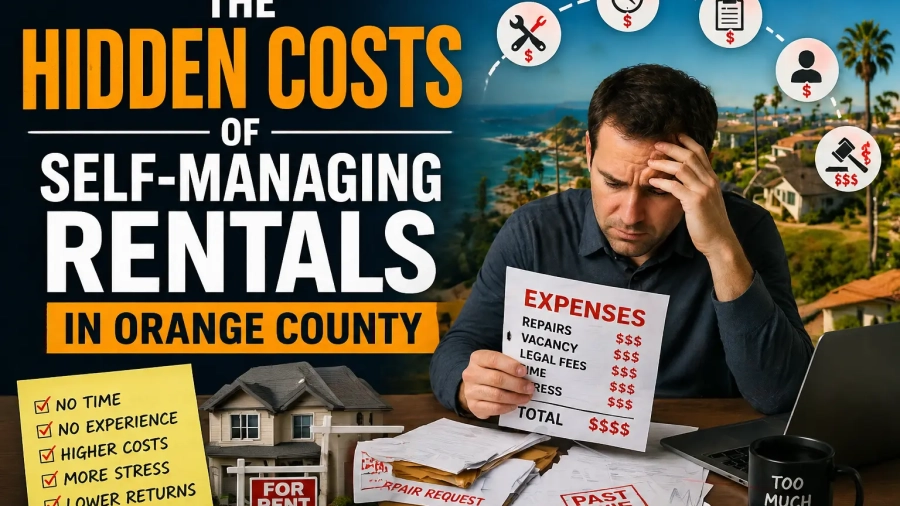
The Hidden Costs of Self-Managing Rentals in Orange County (2026 Landlord Guide)
Table of Contents
Introduction
At first glance, self-managing rental property in Orange County feels like the obvious choice. Why pay a property manager a percentage of your rent when you can handle things yourself?
That logic makes sense, until the hidden costs start showing up.
They don’t arrive as a single bill. Instead, they appear quietly through longer vacancies, unexpected repairs, legal missteps, and hours of your time that go unaccounted for. Over time, these “invisible” expenses can outweigh what you thought you were saving.
This guide takes a deeper look at those hidden costs, not just listing them, but explaining how they impact your bottom line in a real-world Orange County context.
Why Orange County Is a High-Stakes Rental Market
Orange County isn’t your average rental market. Property values are high, tenant expectations are even higher, and regulations in California are among the strictest in the country.
That combination creates opportunity, but also risk.
A small mistake here doesn’t cost a few hundred dollars. It can cost thousands. Pricing your unit incorrectly, for example, doesn’t just affect one month, it affects your annual income and long-term returns.
Because of this, landlords in Orange County operate in a tighter margin for error. The better the market, the less room there is for inefficiency.
The Real Cost of Your Time
Time is the first hidden cost most landlords overlook.
Managing a property isn’t just collecting rent once a month. It involves constant communication, coordinating repairs, handling tenant concerns, and staying compliant with regulations.
Even a relatively smooth rental can take 10–15 hours per month. That includes:
- Answering tenant messages
- Scheduling maintenance
- Managing listings and inquiries
- Keeping financial records
Now consider what your time is worth. If you value your time at $50/hour, that’s $500–$750 per month in “invisible” labor.
Over a year, that adds up quickly, and that’s assuming everything runs smoothly.
Vacancy Loss: The Silent Profit Drain
Vacancy is one of the most expensive problems in real estate, and it’s often underestimated.
Every day your property sits empty, you’re losing money. In Orange County, where rents often exceed $3,000 per month, even a short vacancy becomes significant.
A single month without a tenant could mean:
- $3,000–$4,000 in lost income
- Additional marketing expenses
- Utility costs while the unit is empty
Many self-managing landlords struggle here because filling vacancies requires more than posting on one listing site. It involves pricing strategy, high-quality marketing, and fast response times.
A delay of even two weeks can cost more than a full year of property management fees.
Pricing Mistakes That Cost Thousands
Setting the right rent price is more complex than it seems.
Price too high, and your property sits vacant. Price too low, and you leave money on the table every single month.
For example, underpricing your rental by just $200 per month results in:t
- $2,400 in lost income annually
And overpricing can be even worse if it leads to extended vacancy.
Professional managers rely on real-time market data and trends. Many DIY landlords rely on outdated listings or rough estimates, which leads to costly miscalculations.
Tenant Screening Risks and Consequences
A bad tenant can undo months, or even years, of profit.
Screening isn’t just about checking credit scores. It involves verifying income, reviewing rental history, and identifying potential red flags.
When screening is rushed or incomplete, landlords risk:
- Missed rent payments
- Property damage
- Legal complications during eviction
In California, eviction is not only expensive, it’s time-consuming. One mistake in the process can delay everything further.
This is one area where cutting corners can have the highest financial impact.
Maintenance Inefficiencies and Vendor Costs
Maintenance is unavoidable. The question is how efficiently it’s handled.
Self-managing landlords often lack a reliable network of contractors, which leads to:
- Higher repair costs
- Delays in fixing issues
- Inconsistent quality of work
For example, a small plumbing issue that could cost $150 if handled early might turn into a $1,000 repair if delayed.
Tenants also expect quick responses. Slow maintenance not only increases costs but can lead to dissatisfaction, and eventually, turnover.
Legal Risks in California Rental Laws
California rental laws are detailed and constantly evolving.
From security deposit rules to eviction procedures, there’s little room for error. A simple mistake, like using the wrong notice format, can invalidate your entire process.
Common legal risks include:
- Improper lease agreements
- Fair housing violations
- Mishandling deposits
- Incorrect eviction notices
These aren’t just technical issues. They can lead to fines, lawsuits, or prolonged vacancies.
For many landlords, legal compliance becomes one of the most stressful aspects of self-management.
The Cost of Being “Always On Call”
When you self-manage, you’re not just a landlord, you’re also customer support.
Tenants expect timely responses, regardless of the hour. Emergencies don’t wait for business hours, and neither do urgent maintenance issues.
This means:
- Late-night calls
- Weekend interruptions
- Constant availability
While this doesn’t show up on a financial statement, it has a real cost. Over time, it leads to burnout, slower decision-making, and reduced efficiency.
Turnover Costs Add Up Quickly
Tenant turnover is more than just finding a new renter.
Each transition involves multiple steps:
- Cleaning and repairs
- Listing and marketing
- Screening new applicants
- Potential vacancy time
Even in a best-case scenario, turnover can cost one full month’s rent.
Frequent turnover also disrupts cash flow and increases wear and tear on the property.
Lack of Systems and Operational Inefficiency
Professional property managers rely on systems to streamline operations. Self-managing landlords often rely on manual processes.
Without systems in place, tasks take longer and errors become more likely.
For example:
- Manual rent collection increases late payments
- Disorganized records create tax-time stress
- Missed maintenance requests lead to bigger repairs
Efficiency isn’t just about saving time, it directly impacts profitability.
Emotional Stress and Decision Fatigue
Not all costs are financial.
Dealing with tenants, handling disputes, and making constant decisions can be mentally exhausting.
Over time, this stress can lead to:
- Poor decision-making
- Delayed responses
- Reduced overall performance as a landlord
This is one of the most overlooked aspects of self-management, yet it affects everything else.
Self-Managing vs Property Management: A Real Comparison
At first glance, self-managing seems cheaper because there’s no monthly fee.
But when you factor in hidden costs, the picture changes.
Self-managing often includes:
- Higher vacancy rates
- Increased maintenance costs
- Time investment
- Legal risks
Property management, on the other hand, introduces a fee, but reduces many of these risks.
In many cases, landlords find that professional management actually improves their net income over time.
How to Reduce Hidden Costs (Even If You DIY)
If you choose to self-manage, there are ways to minimize these risks.
Focus on building systems and staying proactive.
- Use data-driven pricing tools to stay competitive
- Invest in thorough tenant screening
- Build relationships with reliable contractors
- Stay updated on California rental laws
- Automate rent collection and communication
These steps won’t eliminate all hidden costs, but they can significantly reduce them.
Conclusion
Self-managing rental property in Orange County can work, but only if you fully understand what it truly costs.
The biggest mistake landlords make is focusing only on visible expenses while ignoring the hidden ones. Over time, those hidden costs, vacancies, inefficiencies, legal risks, and lost time, can quietly erode your profits.
The goal isn’t just to save money. It’s to maximize your return while minimizing stress and risk.
For many landlords, that means rethinking whether self-management is really the most cost-effective option.
Ready to Maximize Your Rental ROI?
If you want to reduce vacancies, avoid costly mistakes, and simplify property management, it may be time to explore a smarter approach.
DirectPads helps landlords streamline leasing, attract better tenants, and improve overall efficiency, without the complexity of traditional management.
👉 Take control of your rental income and eliminate hidden costs with DirectPads Contact Us Today!
FAQs About the Hidden Costs of Self-Managing Rentals
What is the biggest hidden cost of self-managing rentals?
The biggest hidden cost is time. Many landlords spend 10–15 hours per month managing tasks, which translates into thousands of dollars annually when you assign a value to that time.
How do vacancies impact rental profitability?
Vacancies directly reduce income. In high-rent markets like Orange County, even a two-week vacancy can cost over $1,500, making it one of the most significant hidden expenses.
Are property managers worth the cost?
In many cases, yes. While they charge a percentage of rent, they often reduce vacancy rates, improve tenant quality, and prevent costly mistakes, which can increase overall profitability.
How can landlords reduce maintenance costs?
Preventive maintenance and having a reliable vendor network are key. Addressing issues early and working with trusted contractors can significantly reduce long-term repair expenses.
Is self-managing suitable for new landlords?
It can be challenging for beginners. Without experience in pricing, screening, and legal compliance, new landlords are more likely to encounter costly mistakes early on.